
How to Choose the Right Attic Ladder Height for Your Building
How to Choose the Right Attic Ladder Height for Your Building
Selecting the correct attic ladder height is one of the most important steps in ensuring safe installation and smooth operation.
Incorrect sizing can lead to installation problems, unsafe climbing angles, or even structural instability.
Unlike standard portable ladders, folding attic ladders must match the exact ceiling height and installation environment.
Why Height Selection Is So Important
Attic ladders are fixed structural systems. Once installed, they cannot be easily adjusted.
If the height is incorrect, it may cause:
- Unsafe climbing angle
- Poor contact with floor surface
- Excess stress on hinges and joints
- Reduced load capacity performance
- Difficult opening and closing
Proper height selection ensures both safety and long-term durability.
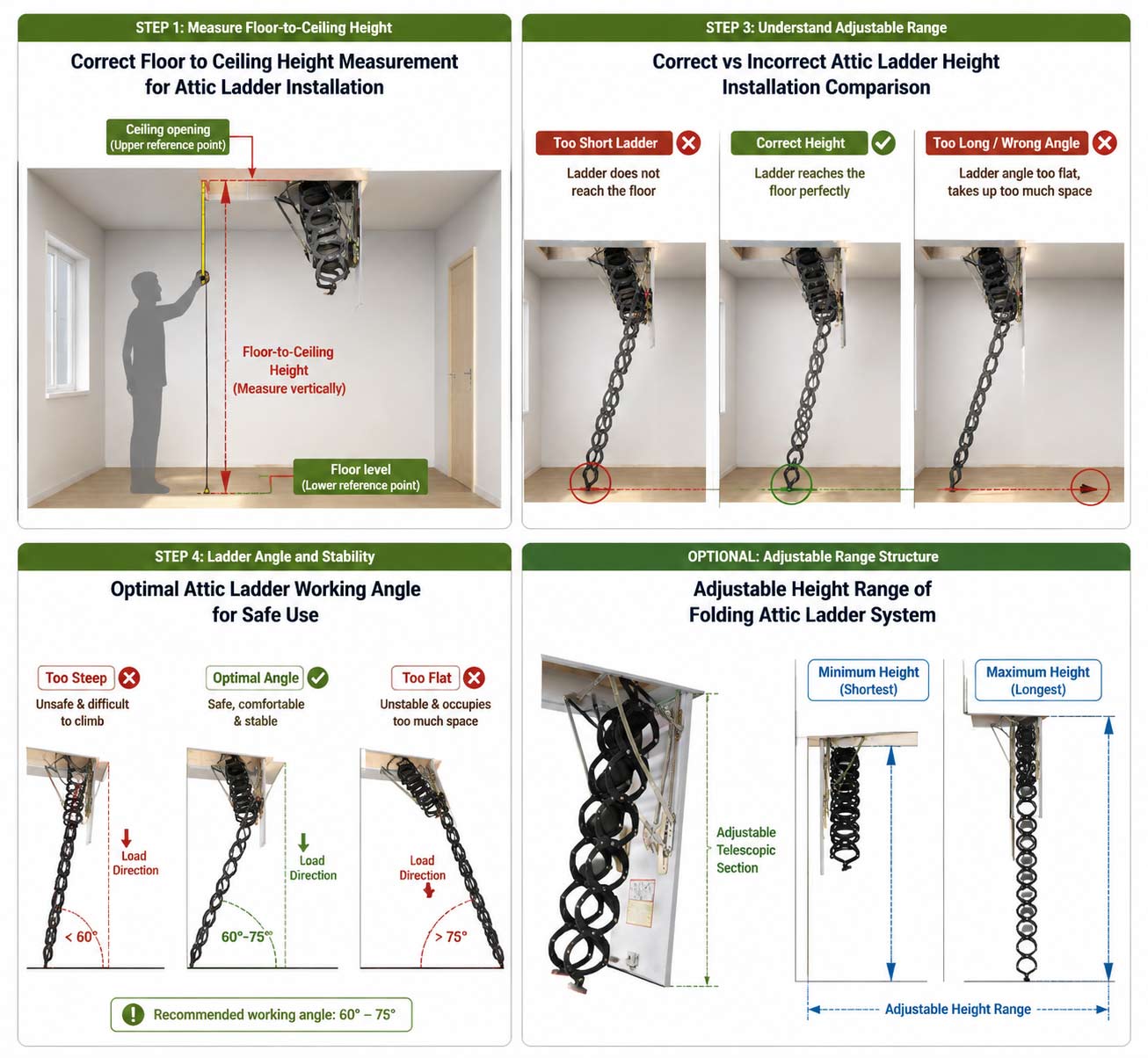
Step 1: Measure Floor-to-Ceiling Height Accurately
The first step is to measure the exact vertical distance from floor to ceiling.
Important measurement points:
- Finished floor surface to ceiling panel
- Avoid estimating or rounding values
- Measure multiple points if floor is uneven
Even small measurement errors can affect ladder performance.
Step 2: Consider Ceiling Opening Position
For folding attic ladders, ceiling opening location also affects usable height.
You should check:
- Whether the opening is centered
- Distance from wall edges
- Available folding space in attic
Incorrect positioning may limit full ladder extension.
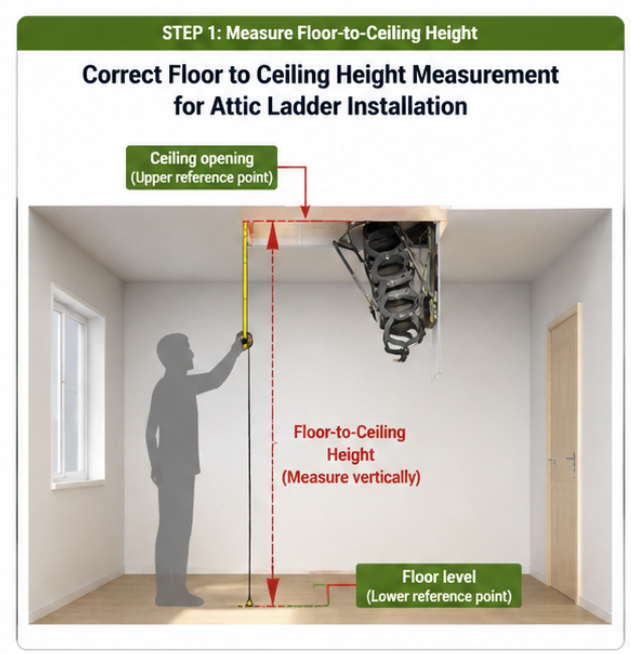
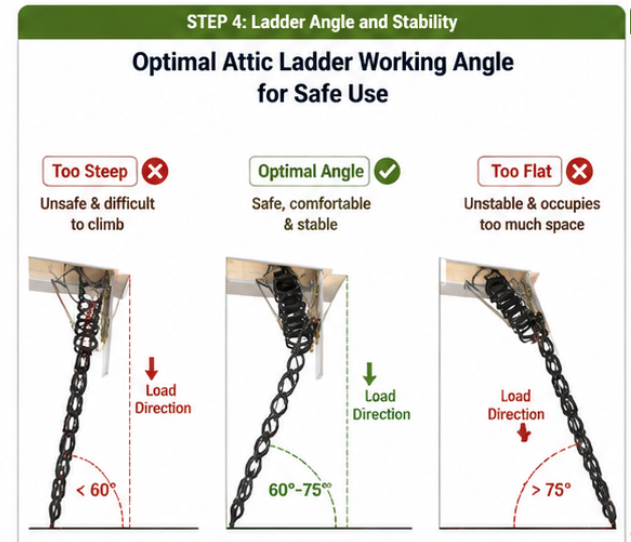
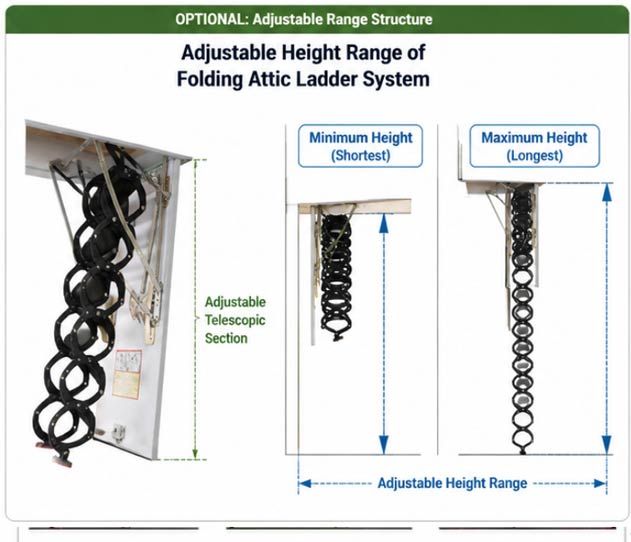
Step 3: Understand Adjustable Range
Most modern attic ladders are designed with adjustable sections.
This allows them to fit different building heights within a specific range.
However:
- Each model has a maximum and minimum height limit
- Exceeding these limits may affect safety and stability
Always choose a model that matches your actual building height range.
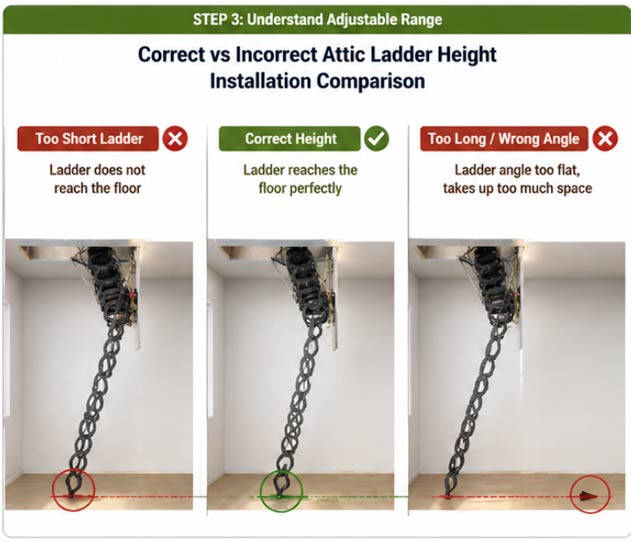
Step 4: Consider Ladder Angle and Stability
The working angle of the ladder directly affects safety.
If the ladder is too steep:
- Climbing becomes difficult
- Load distribution becomes unstable
If the ladder is too flat:
- It may require excessive floor space
- Structural stress increases
A properly matched height ensures an optimal climbing angle.
Step 5: Match Height with Load Requirements
Height selection is not only about fit, but also about safety performance.
Higher installations may require:
- Stronger structural support
- Higher load capacity rating
- Reinforced step design
Heavy-duty models (350–550 kg) are often recommended for commercial or frequent-use environments.
Steel vs Aluminum Alloy in Height Applications
Different materials perform differently in height-related installations.
Steel ladders:
- Suitable for standard residential heights
- Stable and cost-effective
- Better for occasional use
Aluminum alloy ladders:
- Better performance in taller or frequent-use installations
- Lightweight reduces operational strain
- Higher load capacity suitability
Common Height Selection Mistakes
Many installation issues come from:
- Estimating height instead of measuring
- Ignoring adjustable range limits
- Choosing wrong ladder model for ceiling height
- Not considering installation angle
- Overlooking attic space constraints
These mistakes often lead to poor performance or installation failure.
Conclusion
Choosing the correct attic ladder height is essential for safety, performance, and long-term durability.
Accurate measurement, proper model selection, and understanding installation constraints ensure the ladder operates smoothly and safely.
A correctly sized attic ladder provides stable access, improved usability, and long-lasting performance in both residential and commercial applications.