
Why Anti-Slip Design Is Critical for Attic Ladder Safety | Surface, Steps & Structural Protection
Why Anti-Slip Design Is Critical for Attic Ladder Safety | Surface, Steps & Structural Protection
The Role of Anti-Slip Design in Attic Ladder Safety
Anti-slip design is one of the most important safety features in any attic ladder system.
Since attic ladders are used in vertical climbing conditions, any slip or instability can lead to serious accidents.
Proper anti-slip engineering significantly improves user safety, especially when carrying storage items.
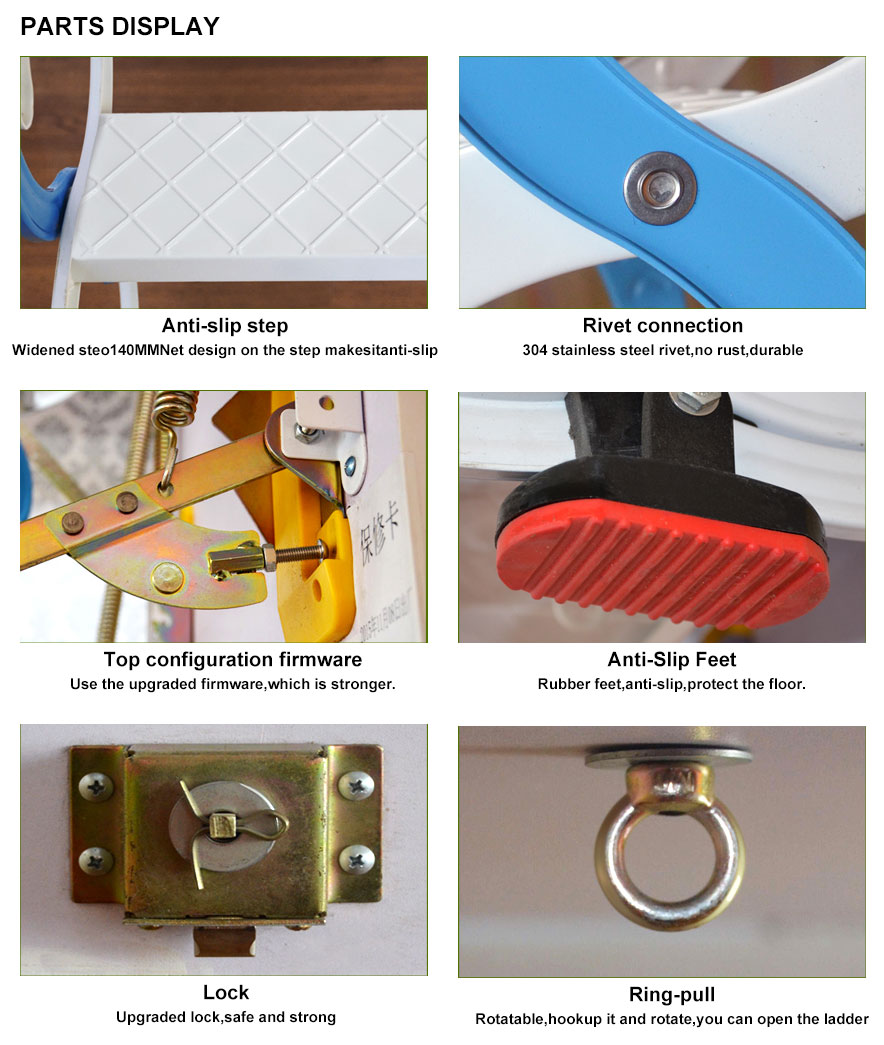
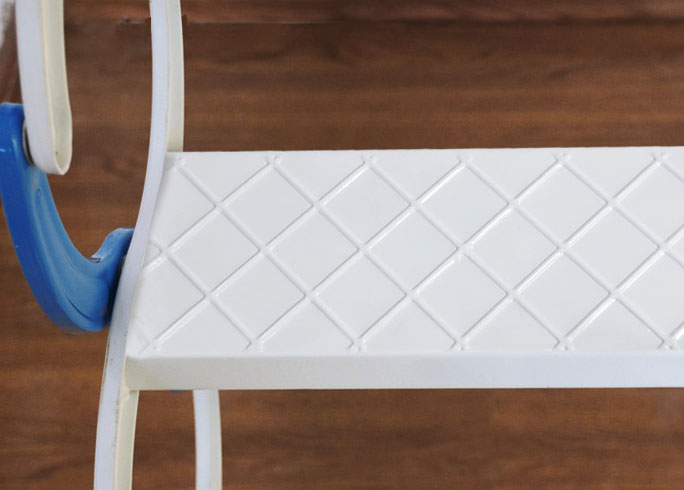
1. Anti-Slip Step Surface Technology
The step surface is the primary contact point during climbing.
Common anti-slip designs include:
- Embossed metal surface patterns
- Grooved step textures
- Friction-enhanced coatings
These designs increase grip between the shoe and step surface, especially in dusty or humid environments.
2. Step Width and Stability Control
Anti-slip performance is not only about surface texture, but also step structure.
Wider and thicker steps provide:
- Larger foot contact area
- Better weight distribution
- Reduced slipping risk
Typical upgraded specifications include:
- 28 mm steel steps
- 33 mm aluminum alloy steps
Compared to standard thin steps, reinforced designs significantly improve stability.
3. Surface Treatment and Coating Protection
Anti-slip performance is enhanced through surface treatment processes such as:
- Powder coating
- Anti-corrosion finishing
- Wear-resistant surface layers
These treatments help maintain grip performance over long-term use.
Without proper coating, steps may become smooth over time, increasing safety risks.
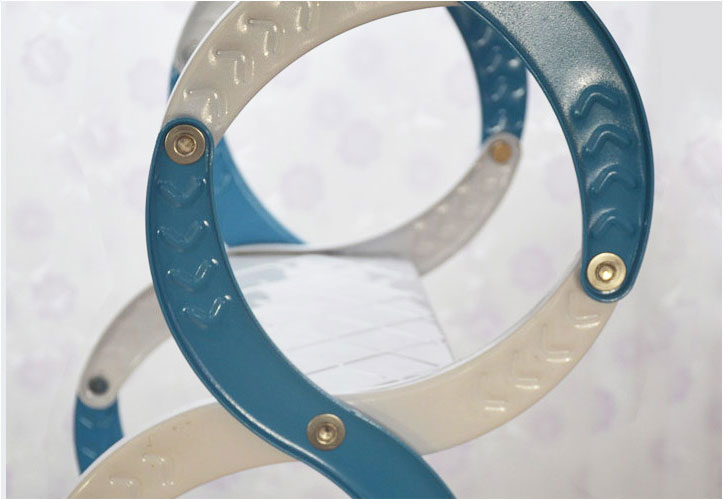
4. Load Pressure and Anti-Slip Relationship
Higher load capacity directly affects anti-slip performance.
When a ladder supports more weight:
- Step pressure increases
- Surface friction becomes more important
- Structural stability becomes critical
This is why heavy-duty ladders (350–550 kg) require stronger anti-slip engineering.
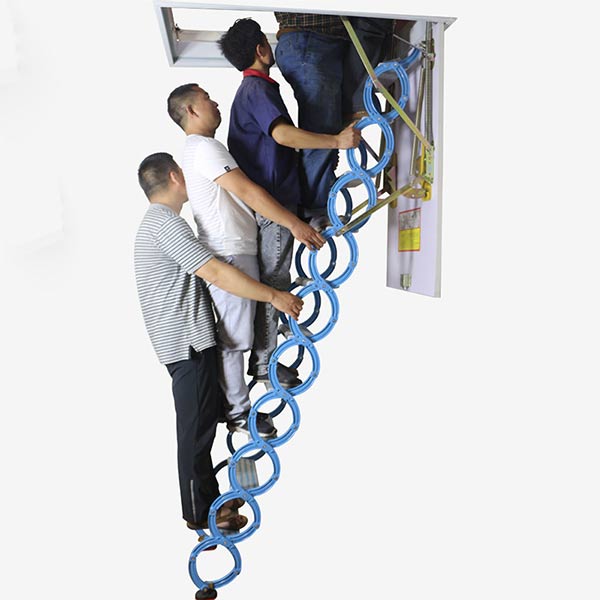
5. Handrail Anti-Slip Support System
Anti-slip design is not limited to steps.
Handrails also play a key safety role.
Standard designs:
- Narrow grip tubes
- Basic metal surface
Upgraded systems:
- 40 mm S-shaped ergonomic handrails
- Anti-slip grip curvature design
Benefits:
- Better hand control
- Reduced slipping risk during climbing
- Improved stability when carrying objects
6. Environmental Impact on Slip Risk
Different environments affect anti-slip performance:
Indoor use:
- Dust accumulation
- Dry surface conditions
Outdoor use:
- Rain exposure
- Humidity changes
- Temperature variations
Therefore, outdoor attic ladders require stronger anti-slip surface engineering.
7. Why Anti-Slip Design Is a Key Buying Factor
Many buyers focus on load capacity and ignore anti-slip design.
However, real-world safety depends heavily on:
- Step grip performance
- Surface friction stability
- Handrail control
- Structural balance
A ladder with strong load capacity but poor anti-slip design is still unsafe.