
Attic Ladder Safety MaintenanceThe Ultimate 5Point Checklist
Attic Ladder Safety & Maintenance: The Ultimate 5-Point Checklist
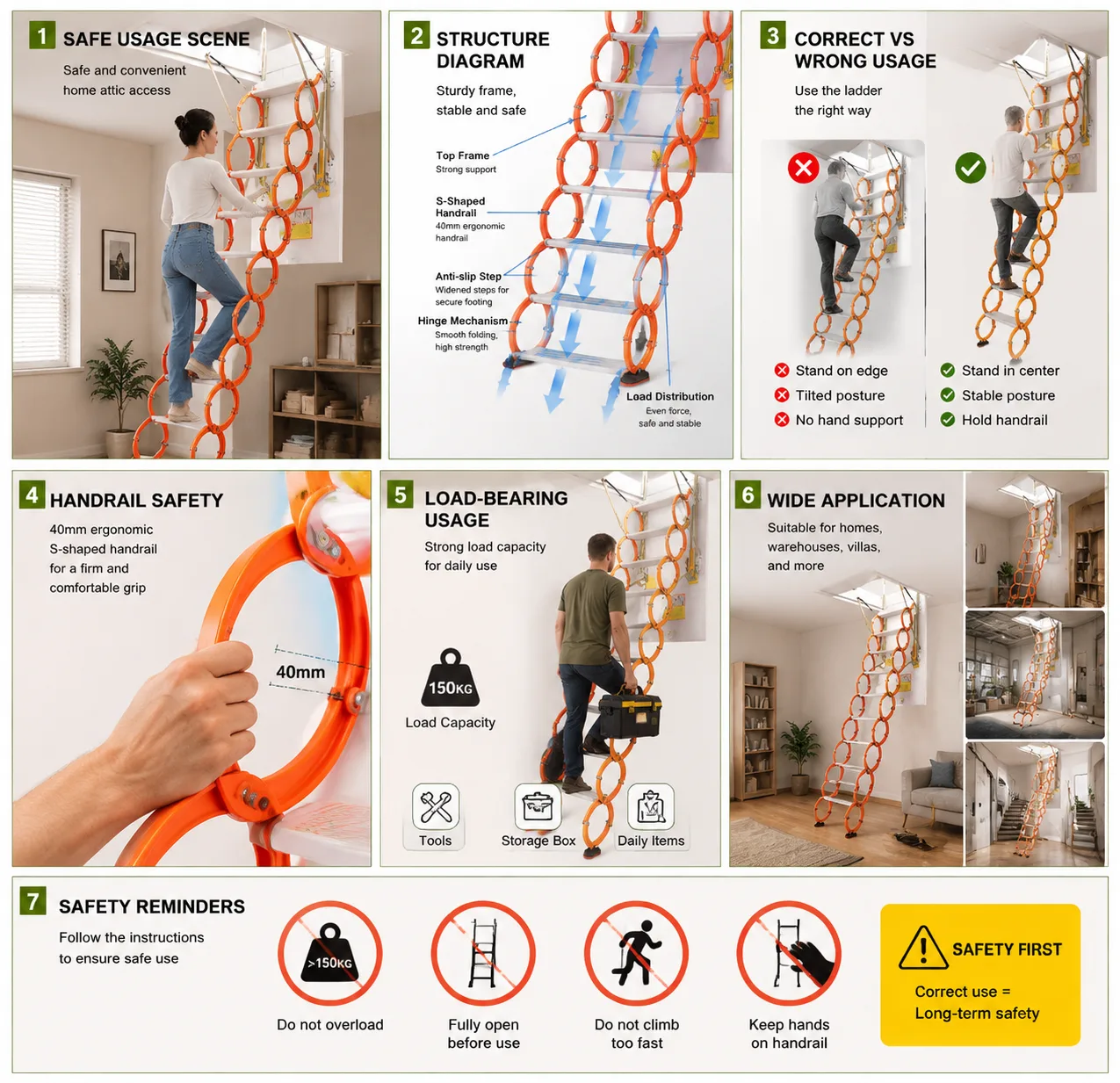
A manual attic ladder is a reliable gateway to your home’s storage, but like any mechanical tool, it requires regular "health checks" to remain safe and efficient. Over time, heavy usage and seasonal temperature changes can affect the tension of springs and the tightness of bolts.
To ensure your family’s safety and extend the lifespan of your ladder, we recommend performing this 5-point inspection every six months.
1. Inspect the Hinges and Pivot Points
The hinges are the most hard-working parts of your manual folding ladder.
- What to look for: Check for any loose rivets or bent metal plates.
- The Fix: If you notice a "creaking" sound, apply a high-quality silicone lubricant to all pivot points. This ensures a smooth, silent pull-down every time.
-
2. Check the Spring Tension
Most high-quality attic ladders use a spring-assist mechanism to offset the weight of the stairs.
- What to look for: Does the hatch door hang open slightly? Does it feel unusually heavy when closing? This may indicate that the springs need adjustment or replacement.
- Safety Tip: Never attempt to adjust heavy-duty springs without following the manufacturer's manual or consulting a professional.
3. Tighten the Mounting Bolts
The vibration from climbing up and down can slowly loosen the bolts that secure the ladder frame to your ceiling joists.
- The Routine: Use a wrench to ensure every bolt is snug. Our heavy-duty manual stairs use industrial-grade hardware, but a quick check twice a year adds an extra layer of peace of mind.
-
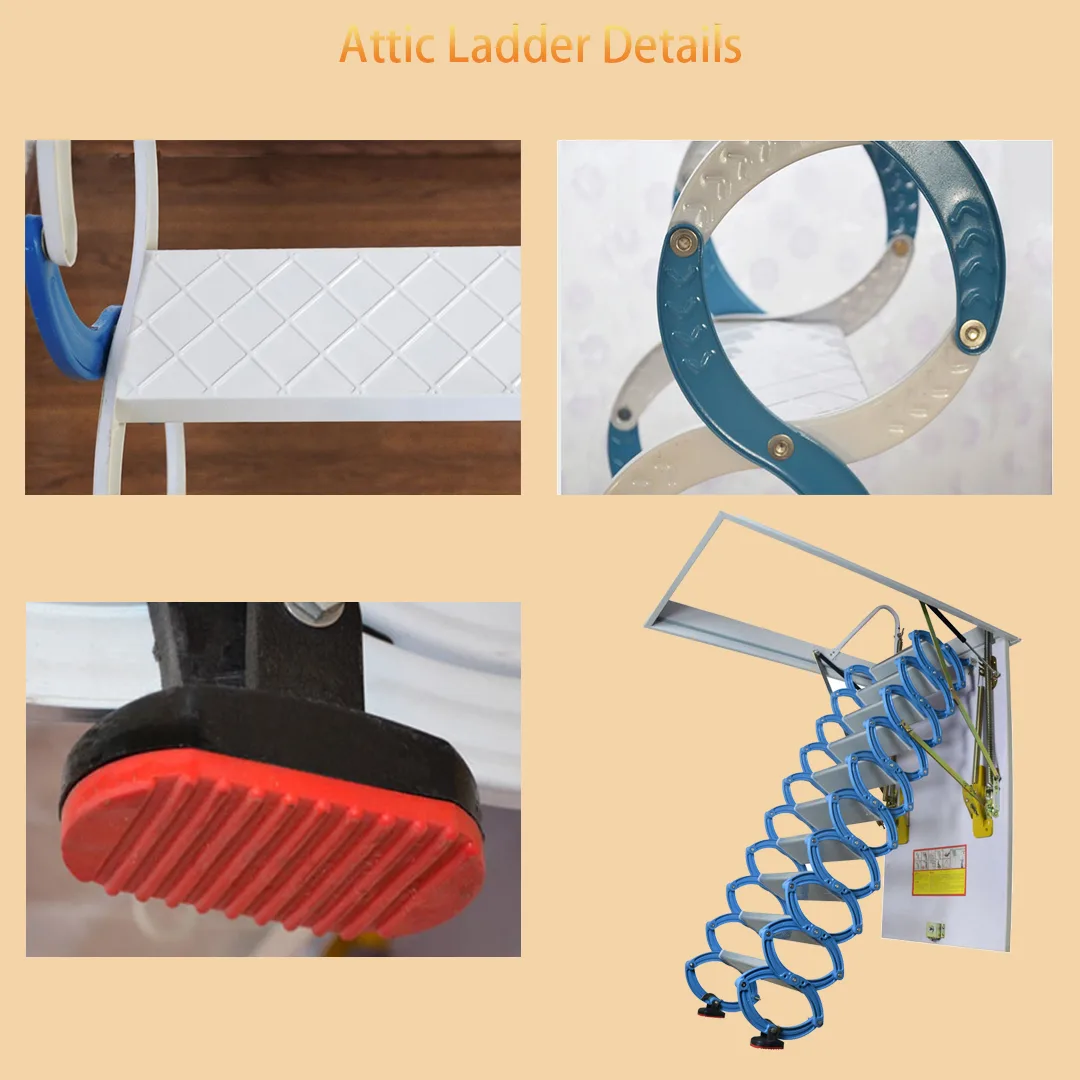
4. Examine the Non-Slip Rubber Feet
The feet of your ladder are responsible for grounding and weight distribution.
- What to look for: Check for cracks, uneven wear, or missing rubber pads.
- Why it matters: Worn feet can cause the ladder to shift during use, damaging your floors and creating a slip hazard. Need replacement feet? Contact our support team!
5. Clean the Treads
Dust and debris can make even the best non-slip steps lose their grip.
- The Routine: Simply wipe down the steps with a damp cloth to remove any construction dust or household grime. This keeps the anti-slip grooves effective. Browse our deep-tread safety models here.
When is it time for a replacement?
If you find structural cracks in the frame, significant rust on the rails, or if the ladder no longer locks securely into place, it is time for an upgrade. Safety should always be your top priority.
Our latest Telescopic Manual Attic Ladders are built with reinforced alloys and safety-first locking joints, making them the most secure option on the market today.
[Keep Your Home Safe—Explore Our Safety-Certified Attic Ladder Collection!]