
Ladder Safety and Inspection Checklist for Workplaces

Ladder Safety and Inspection Checklist for Workplaces
Ladder safety is an important part of workplace risk management in construction, warehousing, manufacturing, and facility maintenance. Damaged equipment, improper ladder positioning, and unsafe climbing practices can increase the risk of falls and workplace injuries. For facility managers, EHS teams, and contractors, a consistent ladder safety and inspection program helps identify hazards before work begins and supports safer job-site operations.
This guide explains key OSHA ladder requirements, practical pre-use inspection steps, and common ladder-use mistakes to avoid. Always consult applicable regulations, manufacturer instructions, and site-specific safety procedures before using a ladder.
Need Ladders for Commercial or Industrial Projects?
We supply aluminum and fiberglass ladders for commercial, industrial, warehouse, and maintenance applications. Contact our team to discuss product types, dimensions, load ratings, and customization options.
Request Product Information and Pricing: /pages/contact
1. Key OSHA Ladder Safety Requirements
Different ladder types and workplace environments may be subject to different requirements. The following U.S. OSHA standards are useful starting points for employers and equipment purchasers.
OSHA 29 CFR 1926.1053 — Construction Ladders
This standard covers ladder requirements in construction, including load capacity, rung spacing, safe positioning, access to upper landings, and proper use.
For example, portable ladders used to access an upper landing generally need their side rails to extend at least 3 feet above the landing, subject to the standard's provisions for situations where this extension is not possible.
OSHA 29 CFR 1910.23 — General Industry Ladders
This standard addresses ladder conditions and use in general industry. It includes requirements for inspecting ladders before initial use in each work shift, identifying defects, removing defective ladders from service, and using ladders safely.
Choosing a Ladder with the Appropriate Load Rating
When selecting a ladder, check its product label and manufacturer's specifications to confirm that its rated working load is suitable for the intended task.
The total load includes the user, clothing, tools, and any materials being carried. Ladder height, material, design, working environment, and applicable safety requirements should also be considered.
Official OSHA references:
-
Construction Ladder Standard: https://www.osha.gov/laws-regs/regulations/standardnumber/1926/1926.1053
-
General Industry Ladder Standard: https://www.osha.gov/laws-regs/regulations/standardnumber/1910/1910.23
2. Ladder Pre-Use Inspection Checklist
Inspect a ladder before use and whenever damage or another incident could affect its safety. General-industry requirements include inspection before initial use in each work shift. Construction employers must ensure that ladders are inspected by a competent person periodically and after an occurrence that could affect their safe use.
Use the following checklist as a practical starting point. Inspection procedures should also follow the ladder manufacturer's instructions and applicable workplace requirements.
1. Rails, Rungs, and Steps
What to check:
-
Cracks, bends, splits, or structural deformation
-
Loose connections or damaged steps
-
Corrosion or other visible deterioration
-
Oil, grease, or other slippery contamination
Corrective action: Remove a defective ladder from service and arrange for appropriate repair or replacement.
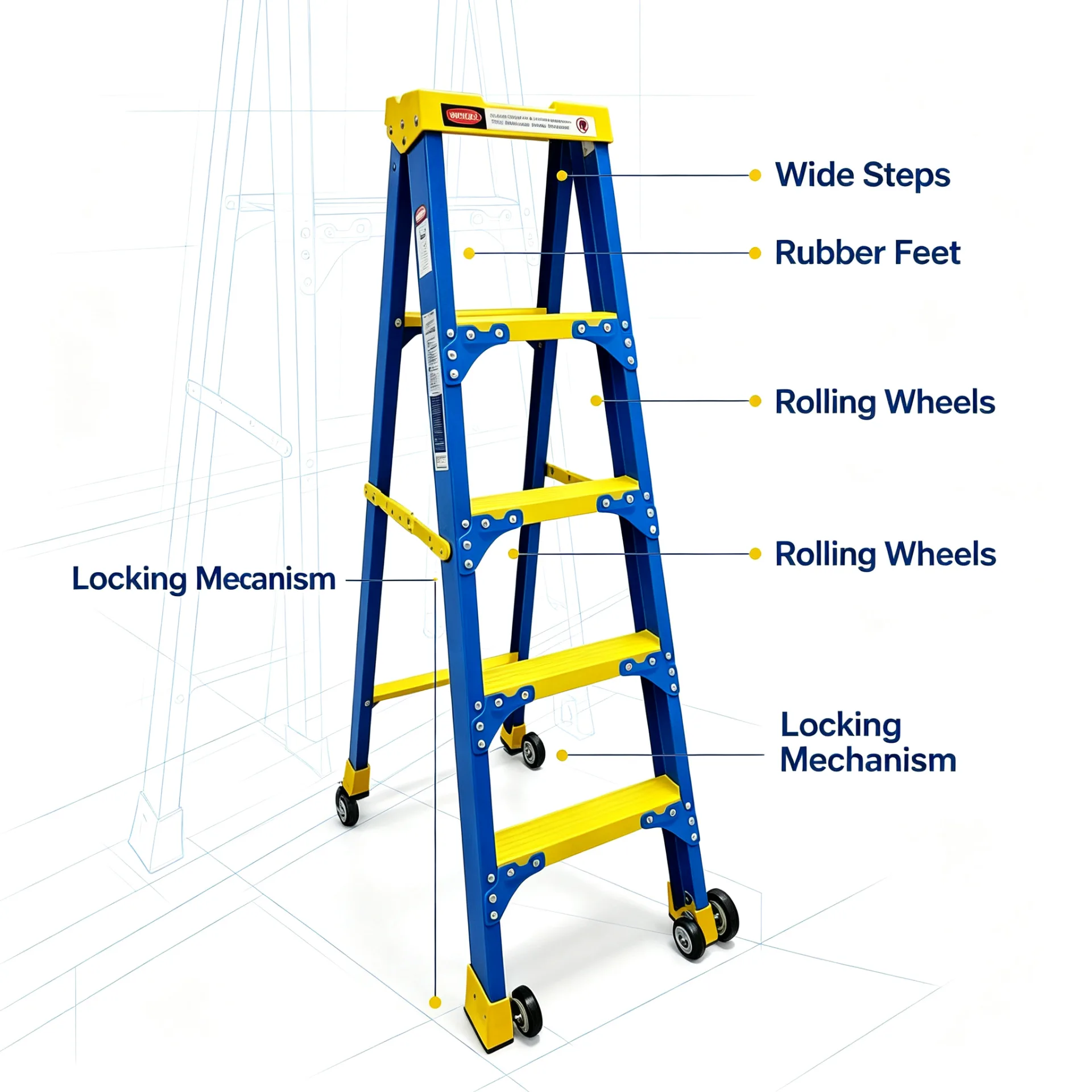
2. Locks, Hinges, and Spreaders
What to check:
-
Locking mechanisms on telescopic and extension ladders
-
Hinges and spreaders on folding and stepladders
-
Damaged or loose extension hardware
-
Whether applicable locking mechanisms engage and function as intended
Corrective action: Do not use the ladder if a locking or support mechanism fails to operate properly. Follow the manufacturer's instructions for inspection and repair.
3. Feet and Anti-Slip Components
What to check:
-
Missing or excessively worn feet
-
Split or damaged rubber pads
-
Loose fittings or damaged anti-slip components
-
Conditions that could reduce stability on the intended surface
Corrective action: Replace damaged components according to the manufacturer's instructions before use.
4. Platforms, Guardrails, and Accessories
What to check:
-
Platform surfaces and connections
-
Guardrails and safety gates, where fitted
-
Mesh panels or other safety accessories, where applicable
-
Loose, damaged, or missing components
Corrective action: Do not use equipment with damaged safety components until it has been properly repaired or replaced.
Important: Defective ladders must be clearly identified and removed from service until repaired or replaced as required. A visual inspection alone does not establish that a ladder meets every applicable design or testing requirement.
3. Three Common Ladder Safety Mistakes to Avoid
Mistake 1: Overreaching While on a Ladder
Leaning too far to one side can shift the user's center of gravity and cause the ladder to tip.
Keep your body positioned within the ladder's side rails, maintain a secure grip, and descend to reposition the ladder whenever the work area is out of reach.
Choose a ladder of suitable height for the task rather than stretching beyond a safe working position.
Mistake 2: Standing on the Top Step of a Stepladder
OSHA construction rules prohibit using the top or top step of a stepladder as a step. Users should also follow the manufacturer's instructions and warning labels for the specific model.
If a task requires a larger standing area or a more suitable working height, consider a properly selected platform ladder or another appropriate work platform.
Mistake 3: Setting an Extension Ladder at the Wrong Angle
For a conventional non-self-supporting portable ladder, OSHA construction rules specify a setup angle at which the horizontal distance from the top support to the foot is approximately one-quarter of the ladder's working length.
This is commonly described as the 4-to-1 rule and corresponds to an angle of approximately 75.5 degrees from the horizontal.
For example, when the ladder's working length is 16 feet, the base should generally be positioned approximately 4 feet horizontally from the upper support point.
Place the ladder on a stable, level surface, secure it where required, and follow the manufacturer's instructions. Never move, shift, or extend a ladder while someone is on it. Special ladder designs may require different procedures.
4. How to Build a More Consistent Ladder Safety Program
A reliable ladder safety program should cover more than equipment selection. Employers and site managers can improve consistency by establishing clear procedures for the following areas.
Equipment Selection
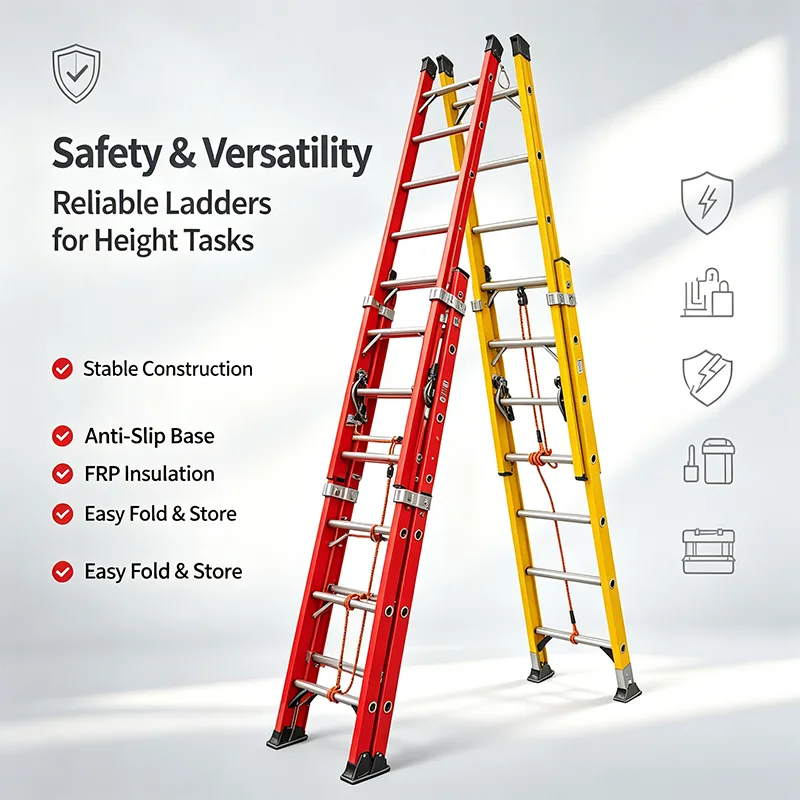
Match ladder type, height, material, and rated working load to the task and work environment. Consider whether aluminum or fiberglass construction is appropriate for the site, particularly where electrical hazards may be present.
Inspection Records
Document inspections and corrective actions according to applicable requirements and company procedures. Clear records help teams track equipment conditions and identify recurring maintenance issues.
Employee Training
Train employees to recognize ladder defects, position ladders correctly, maintain safe climbing practices, observe load limits, and report damaged equipment.
Defect Management
Establish a clear process for identifying, isolating, repairing, or replacing unsafe equipment. Damaged ladders should not return to service until they have been appropriately addressed.
Purchasing and Equipment Management
For businesses purchasing ladders in volume, standardizing product specifications and maintaining equipment records can simplify procurement, replacement planning, and internal safety reviews.
Looking for Ladders for Your Business?
We supply aluminum and fiberglass ladders for commercial, industrial, warehouse, and maintenance applications. Our product range includes platform ladders, extension ladders, folding ladders, and other access equipment for different working requirements.
Contact our team to discuss ladder types, dimensions, load ratings, and customization options.
Request a Quote: /pages/contact
Disclaimer: This article provides general educational information and is not a substitute for applicable laws, official standards, manufacturer instructions, or site-specific safety training. Requirements may vary by jurisdiction, industry, ladder design, and applicable standard edition. Verify the current requirements applicable to your workplace before making compliance decisions.