
Commercial Telescopic Ladder Guide: Safety & Sourcing
Telescopic Ladder Buying Guide: Safety, Sizing and Commercial Applications
For mobile service technicians, building inspectors, and commercial contractors, transport space and rapid deployment are important considerations. Unlike conventional extension ladders that may require roof racks and additional handling, a telescopic ladder can retract into a compact size for easier storage and transportation.
Our commercial telescopic ladder is designed for users who need a portable access solution for maintenance, inspection, and other professional applications.
Sourcing Telescopic Ladders for Commercial Use?
We supply telescopic ladders for distributors, wholesalers, maintenance companies, and commercial equipment suppliers. OEM services, custom branding, packaging options, and bulk order quotations are available.
Contact our team to discuss your required ladder height, specifications, packaging, and order quantity.
Request a Commercial Specification Sheet and Bulk Quotation
1. Understanding Telescopic Ladder Safety Features
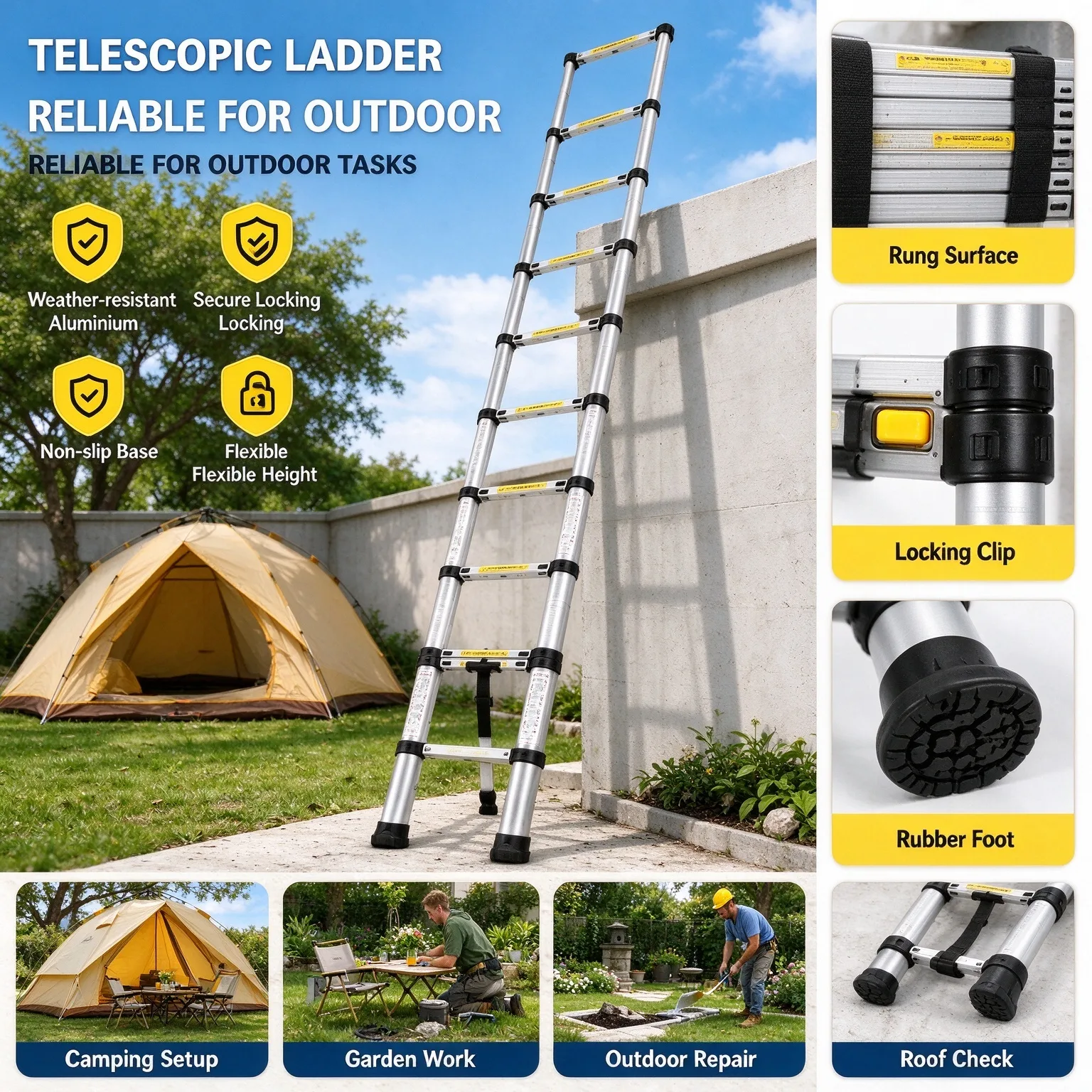
Telescopic ladders use sliding sections and locking mechanisms to extend to the required height and retract for storage. When selecting a ladder for professional use, buyers should pay attention to the locking system, structural stability, and ease of operation.
Reliable Locking Mechanisms
Each extendable section should lock securely according to the manufacturer's instructions. Before climbing, users should check the locking indicators and confirm that all required sections are properly engaged.
Controlled Retraction
Some telescopic ladders feature a controlled lowering mechanism that helps the ladder retract more gradually. This can reduce the risk of sudden section movement and finger injuries. Users should still keep their hands clear of moving sections and follow the product instructions.
Stable Aluminum Sections
The dimensions, material, wall thickness, and overlap of the telescopic tubes affect the ladder's rigidity and stability. Buyers should compare the actual specifications and test documentation rather than relying on appearance alone.
Non-Slip Feet and Base Stabilizers
Non-slip feet help maintain contact with the ground. Depending on the ladder design and extended height, a stabilizer bar may also be required. Always check the manufacturer's requirements for the specific model.
2. Understanding EN 131-6 and ANSI Ladder Standards
When purchasing telescopic ladders for commercial applications, it is important to confirm which safety standards apply to the product and destination market.
EN 131-6 covers telescopic ladders within the EN 131 ladder standards framework. In the United States, buyers may also need to consider applicable ANSI requirements and workplace safety regulations.
Before placing a bulk order, check the following specifications:
-
Rated load capacity, including the user, clothing, and tools
-
Applicable safety standard and model-specific test reports
-
Locking mechanism design and operating instructions
-
Ladder section dimensions and material specifications
-
Stabilizer bar and non-slip foot configuration
-
Folding, extension, and retraction performance
-
Product labels, warnings, and packaging requirements
Do not assume that every telescopic ladder meets the same requirements. Certification and test results should be verified for the exact model being purchased.
3. How to Choose the Right Telescopic Ladder Length
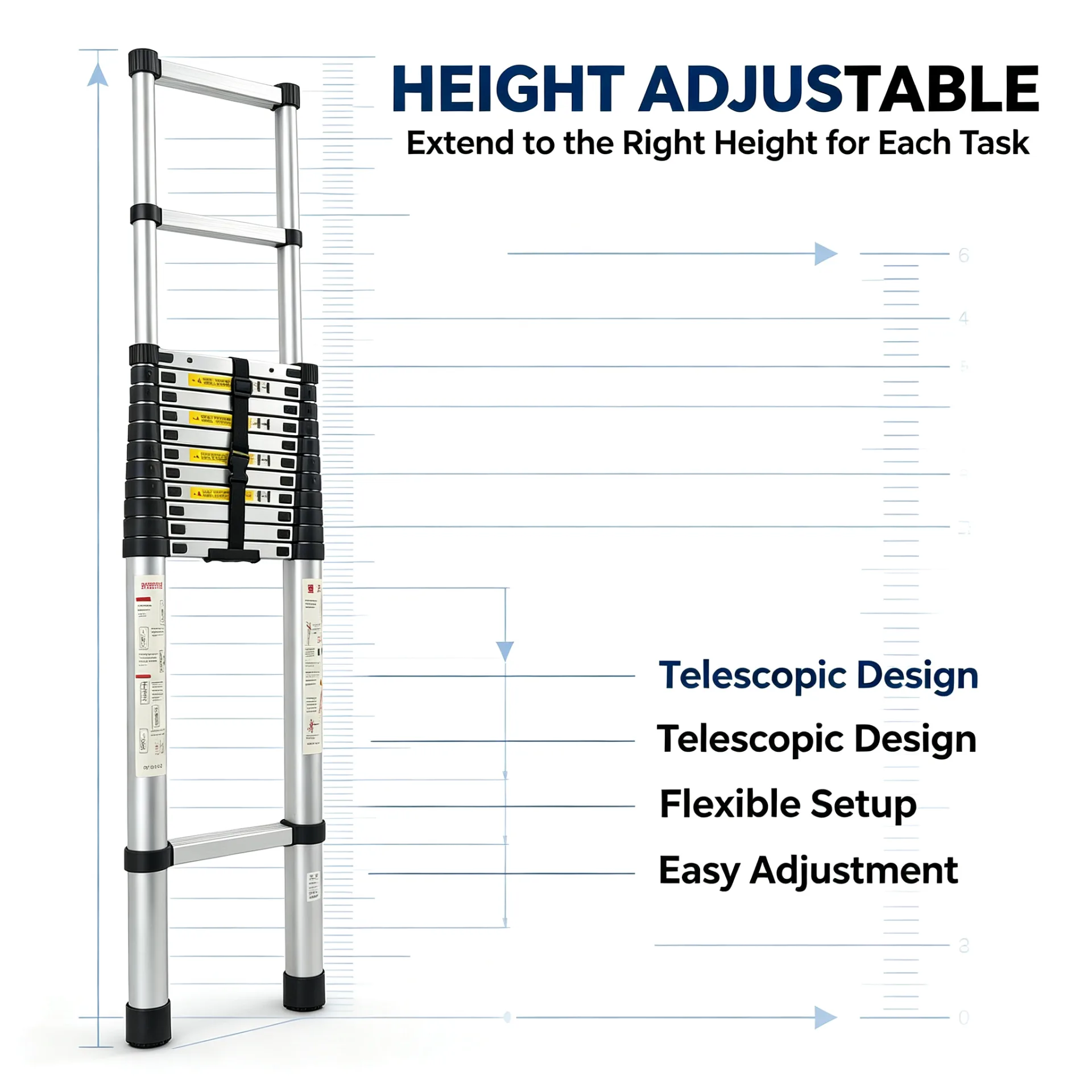
Selecting the correct ladder length is essential for safe access. Consider the height of the intended work area, the ladder's maximum extended length, the required working angle, and the manufacturer's operating instructions.
Compact Models for Indoor Maintenance
Telescopic ladders with shorter extended lengths may be suitable for indoor inspections, ceiling maintenance, and other low-height tasks. Their compact retracted size can also simplify storage in service vehicles.
Medium-Length Models for General Contractors
Medium-length ladders can be useful for electrical maintenance, building inspections, facility repairs, and some single-story exterior tasks. Confirm that the selected model provides sufficient access height for the intended application.
Longer Models for Exterior and Industrial Work
Longer telescopic ladders may be suitable for certain building maintenance and industrial access tasks. As ladder length increases, stability and correct setup become especially important. Check whether the selected model requires a stabilizer bar or other specified accessories.
Follow the Correct Ladder Setup Angle
For a leaning ladder, follow the manufacturer's instructions for positioning and setup. Where the applicable guidance specifies a 4:1 setup ratio, the ladder base should be positioned approximately one unit away from the supporting wall for every four units of vertical working height.
Always place the ladder on a firm, level surface and secure it as directed. Never exceed the rated load capacity or use a ladder in a configuration that the manufacturer does not permit.
Need a Stable Platform for Extended Work?
For maintenance tasks that require prolonged standing, hands-free work, or space for tools, a platform ladder may be a more suitable option.
Explore our Industrial Platform Ladder with Mesh Safety Enclosure to compare a different type of access equipment for commercial and industrial environments.
4. Telescopic Ladder Inspection and Maintenance Checklist
Before each use, inspect the ladder and confirm that it is suitable for the intended task.
Check the Locking Indicators
Extend the ladder according to the manufacturer's instructions. Confirm that all required locking mechanisms are properly engaged before climbing.
Keep the Tubes Clean
Remove dirt, dust, and debris from the telescopic tubes. Contamination can affect the movement of sliding sections and the operation of the locking mechanisms.
Inspect the Feet and Stabilizer
Check the rubber feet for wear, damage, or looseness. If the model uses a stabilizer bar, confirm that it is correctly installed and secured.
Check for Structural Damage
Look for bent tubes, cracked components, loose fasteners, damaged rungs, or other signs of wear. Remove a damaged ladder from service until it has been assessed and repaired in accordance with the manufacturer's instructions.
Set Up on a Suitable Surface
Position the ladder according to the manufacturer's guidance. Avoid unstable ground, slippery surfaces, and locations where doors, vehicles, or other activities could create additional hazards.
Regular inspection and correct maintenance can help extend the service life of a telescopic ladder and support safer operation.
5. Frequently Asked Questions About Telescopic Ladders
Can a telescopic ladder be used partially extended?
Some telescopic ladders allow partial extension, while others require specific extension sequences or configurations. Check the instructions for the exact model and confirm that all required locking mechanisms are engaged before use.
What is the maximum load capacity of a telescopic ladder?
Load capacity varies by model and design. Some professional models have a rated load capacity of 150 kg (330 lb), but buyers should confirm the rating shown on the product label and in the relevant documentation. The total load includes the user and any tools or equipment being carried.
How should telescopic ladder tubes be cleaned?
Use a clean, dry cloth to remove dust and dirt from the tubes. Follow the manufacturer's maintenance instructions and avoid applying oil, grease, or other lubricants unless specifically recommended, as these products may affect the sliding mechanism or attract dirt.
What should buyers check when sourcing telescopic ladders in bulk?
Commercial buyers should compare the available ladder heights, retracted dimensions, rated load capacity, material specifications, locking system, applicable test documentation, packaging, and customization options. Confirm the production lead time and minimum order quantity before placing an order.
Can telescopic ladders be customized for wholesale orders?
Depending on the model and order quantity, manufacturers may offer options such as packaging customization, private labeling, product specifications, and selected accessories. Confirm the available options and production requirements with the supplier.
Direct Factory Sourcing for Telescopic Ladders
Are you looking for a telescopic ladder supplier for wholesale distribution, industrial maintenance, or OEM projects?
Xinxiang Zhuojin Machinery Co., Ltd. provides ladder products for international B2B buyers. Contact us with your required extended length, order quantity, target market, and packaging requirements.
We can discuss available models, product specifications, customization options, and bulk order pricing based on your needs.