
Ultimate Guide to Platform Ladders:Safety, Sizing Selection
The Ultimate Guide to Platform Ladders: Safety, Sizing & Selection
Platform ladders are widely used in warehouses, distribution centers, manufacturing facilities, and commercial maintenance environments. They provide an elevated standing area for tasks that require more space and stability than a conventional step ladder may offer.
For businesses working at height, choosing the right platform ladder involves more than selecting a suitable height. Platform dimensions, load capacity, material, guardrail configuration, mobility, and workplace conditions all affect the suitability of the equipment.
In this guide, we explain how to choose a platform ladder for industrial and commercial applications, compare aluminum and fiberglass options, and review important safety considerations before purchasing.
1. What Is a Platform Ladder?
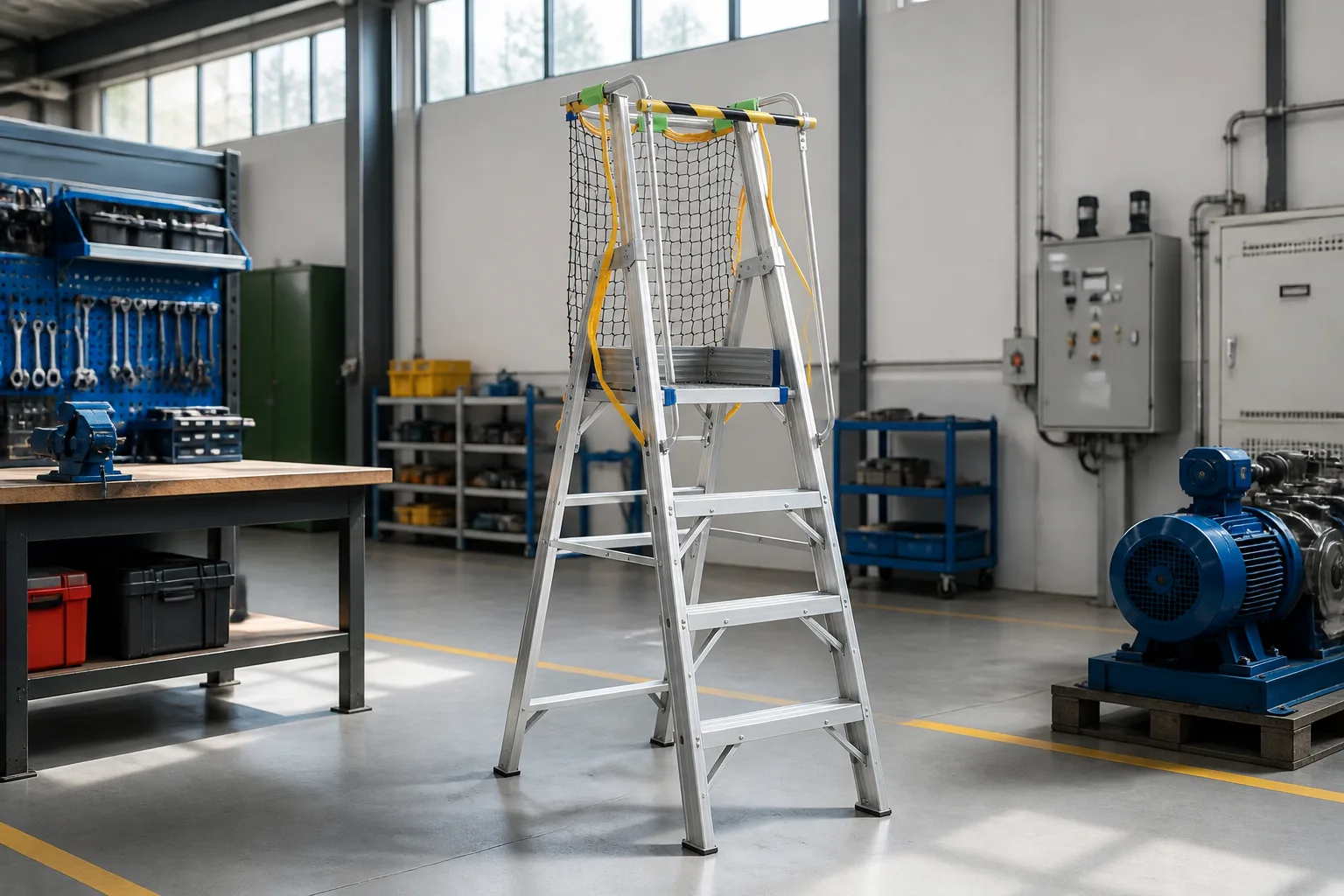
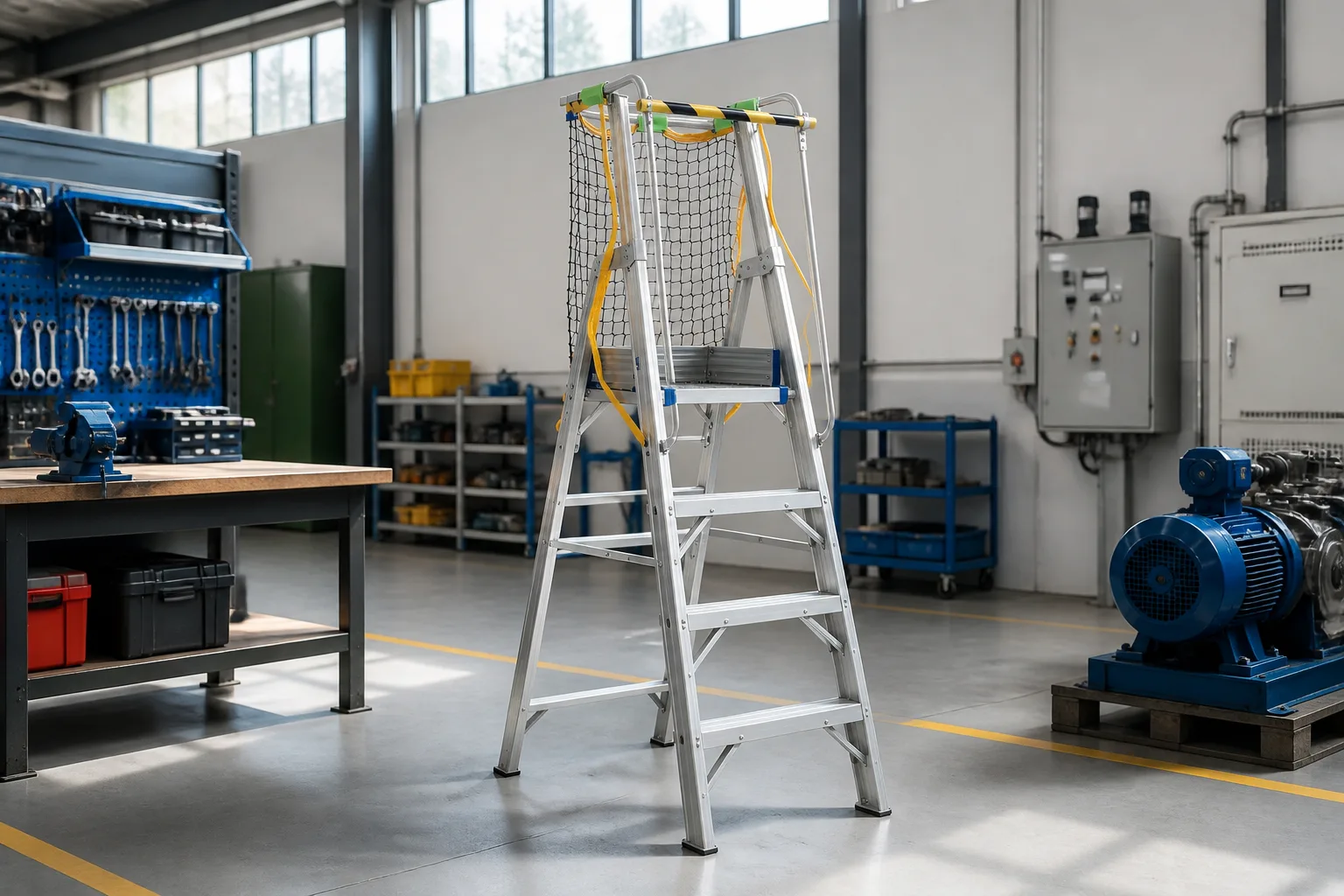
A platform ladder is a ladder designed with an elevated standing platform that provides a larger working surface than a conventional ladder rung or narrow step.
Depending on the design, platform ladders may feature guardrails, handrails, safety gates, anti-slip surfaces, folding structures, or wheels and locking mechanisms.
These features make platform ladders useful for tasks that require workers to remain elevated while inspecting equipment, handling tools, checking inventory, or performing routine maintenance.
Common Applications of Platform Ladders
-
Warehousing and logistics: Accessing inventory, inspecting storage areas, and performing stock checks.
-
Manufacturing facilities: Reaching elevated components and conducting production-line maintenance.
-
Commercial maintenance: Replacing lighting, inspecting ceiling equipment, and carrying out routine repairs.
-
Retail and distribution: Accessing high shelving and maintaining storage areas.
-
Industrial operations: Providing an elevated working position for suitable inspection and service tasks.
The right design depends on the working environment, task duration, required access height, and available floor space.
2. Platform Ladder vs. Traditional Step Ladder
Both platform ladders and traditional step ladders are useful for working at height. However, their designs serve different needs.
Larger Standing Area
A platform ladder provides a dedicated standing surface, which can offer more room for foot placement during suitable work tasks. This can be helpful when operators need to maintain a working position while inspecting equipment or handling tools.
Guardrail Options
Some platform ladders include guardrails, handrails, or safety gates to provide additional protection. The configuration should be selected according to the ladder design, working height, application, and applicable safety requirements.
Suitable for Repeated Access Tasks
In warehouses and factories, workers may need to access elevated areas several times during a shift. A platform ladder designed for the task can provide a more practical working arrangement than a basic step ladder.
Choosing the Right Equipment
A platform ladder is not automatically the best choice for every job. A conventional step ladder may be sufficient for short, simple tasks, while a platform ladder may be more appropriate when a larger standing area or additional fall-protection features are required.
The key is to match the ladder design to the actual work rather than choosing by appearance alone.
3. How to Choose the Right Platform Ladder Height
Selecting the correct height is essential for both productivity and safety.
Before purchasing a platform ladder, identify the highest point the operator needs to reach and the position from which the task will be performed.
Platform Height vs. Working Height
These measurements describe different things:
-
Platform height: The vertical distance from the floor to the standing surface.
-
Working height: An approximate reach height based on the platform height and the operator's body dimensions.
Working height is not a fixed measurement because users have different heights and reach lengths. The task itself also affects the required height.
For example, reaching a shelf to inspect a label is different from reaching overhead to service equipment. Both tasks may require different ladder configurations even when the target height is similar.
Questions to Ask Before Selecting a Height
-
What is the maximum height of the work area?
-
Will the operator need to reach forward, sideways, or overhead?
-
Is there enough room to position the ladder safely?
-
Will tools or materials need to be carried to the working position?
-
Does the selected model provide the required platform dimensions and protective features?
Avoid selecting a ladder that requires the operator to stand on guardrails or stretch excessively to reach the target. The ladder should be suitable for the task without relying on unsafe positioning.
4. Understanding Platform Ladder Load Capacity
Load capacity is one of the most important specifications when purchasing ladders for commercial and industrial use.
The maximum intended load must account for the operator's weight plus tools, equipment, and materials carried during the task.
Common U.S. Portable Ladder Duty Ratings
The following ratings are commonly associated with U.S. portable ladder classifications:
-
Type IAA: 375 lb (approximately 170 kg)
-
Type IA: 300 lb (approximately 136 kg)
-
Type I: 250 lb (approximately 113 kg)
These figures are reference points, not a substitute for the rating on a specific product. The applicable classification and requirements depend on the ladder category and relevant standard.
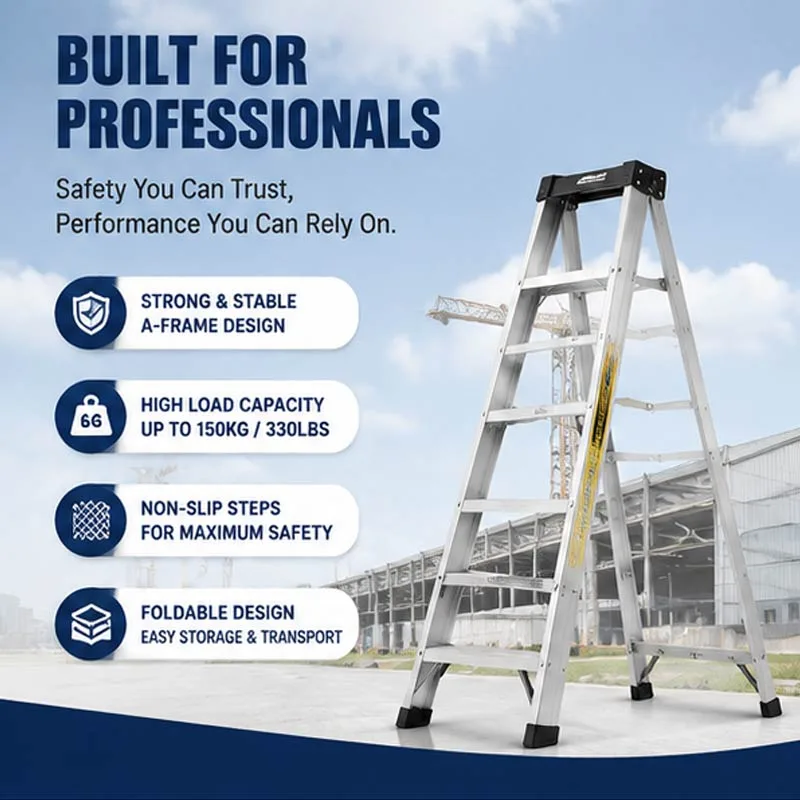
For mobile ladder stands and mobile ladder stand platforms, buyers should also review the applicable requirements for structural strength, stability, and caster locking. Do not assume that a conventional portable ladder rating automatically establishes compliance for every mobile platform design.
What Should Buyers Check?
When comparing platform ladders, verify:
-
Maximum rated load
-
Product label and applicable standard
-
Platform dimensions
-
Structural materials and connections
-
Stability and support configuration
-
Whether the product is intended for stationary or mobile use
For bulk purchasing, request the manufacturer's specifications and supporting test or compliance documentation before confirming an order.
5. Aluminum vs. Fiberglass Platform Ladders
Material selection should reflect the work environment, handling requirements, and exposure conditions.
Aluminum Platform Ladders
Aluminum is commonly selected for applications where relatively low equipment weight and ease of handling are important.
Potential advantages include:
-
Lightweight construction for easier transport and positioning
-
Good corrosion resistance under suitable conditions
-
Practical use in warehouses and distribution facilities
-
Convenient handling for routine maintenance tasks
However, aluminum conducts electricity. Aluminum ladders should not be used where electrical hazards are present unless the specific application and applicable safety procedures expressly permit their use.
Fiberglass Platform Ladders
Fiberglass ladders are often considered for electrical maintenance and utility-related applications because fiberglass is electrically non-conductive under suitable conditions.
Potential advantages include:
-
Non-conductive structural material
-
Suitability for certain electrical maintenance environments
-
Durable construction for appropriate industrial applications
-
Availability in configurations designed for professional use
Fiberglass ladders are generally heavier than comparable aluminum models. Their suitability also depends on the condition of the material, electrical contamination, moisture, damage, and manufacturer instructions.
Important: Neither material makes a ladder suitable for every environment. Buyers should evaluate the actual electrical hazards, working conditions, and product specifications before selecting a model.
6. Fixed, Folding, or Mobile Platform Ladders?
The platform ladder structure is another important purchasing consideration.
Fixed Platform Ladders
Fixed designs are suitable for designated working locations where the equipment can remain positioned for repeated access. Buyers should evaluate the installation area, working height, stability, and access requirements.
Folding Platform Ladders
Folding models can be useful where storage space is limited or equipment needs to be transported between work areas.
When comparing folding models, check the folded dimensions, opening and locking mechanism, platform size, and ease of storage.
Mobile Platform Ladders
Mobile designs may feature wheels or casters to help operators reposition the equipment around a warehouse or production area.
For mobile ladder stands and mobile ladder stand platforms, OSHA requirements address movement prevention, stability, slip-resistant surfaces, and protective features. The exact requirements depend on the equipment category and configuration.
Never move a mobile platform ladder while someone is standing on it. Before climbing, position it on a suitable surface and engage the designated movement-prevention or locking system according to the manufacturer's instructions.
7. Platform Size, Guardrails, and Other Features
The standing platform is a key feature of this ladder category, but its dimensions and protective configuration should match the intended application.
Platform Dimensions
A larger standing area may provide more room for foot placement and routine work activities. However, the required dimensions depend on the task, available workspace, and ladder design.
Guardrails and Safety Gates
Guardrails and gates can provide additional protection against falls when included in the appropriate design. Buyers should verify the actual configuration rather than assuming every platform ladder has the same protective structure.
Anti-Slip Surfaces
Anti-slip steps and platform surfaces help reduce the risk of slipping. Keep these surfaces clean, dry, and free of oil, dust, packaging debris, and other contaminants.
Folding and Locking Mechanisms
For folding models, check that the locking components engage correctly before use. Inspect hinges, fasteners, and structural connections regularly.
Optional Safety Accessories
Depending on the model, available features may include safety nets, additional handrails, gates, or other protective components. Confirm compatibility and the intended use of each accessory before ordering.
For industrial buyers, comparing these specifications across models helps identify the configuration that best fits the work environment.
8. Platform Ladder Safety and Compliance
Safe ladder use requires suitable equipment, correct positioning, regular inspection, and proper operator training.
In the United States, OSHA 29 CFR 1910.23 covers ladder requirements for general industry. Specific provisions apply to portable ladders, mobile ladder stands, and mobile ladder stand platforms.
Buyers should identify which requirements apply to their particular equipment rather than assuming all platform ladders fall under identical provisions.
Pre-Use Inspection Checklist
Before each work shift, inspect the ladder for visible defects and check it more frequently when conditions require.
-
Inspect rails, steps, and the platform for damage.
-
Check welds, fasteners, hinges, and locking components.
-
Confirm that wheels and movement-prevention mechanisms work correctly, where fitted.
-
Check anti-slip surfaces for wear, contamination, or damage.
-
Verify that guardrails, gates, and other protective components are secure.
-
Confirm that the ladder is suitable for the intended load and working conditions.
Any ladder with structural defects or other conditions that could make it unsafe should be removed from service until repaired or replaced.
Safe Operating Practices
-
Place the ladder on a stable, level surface unless the equipment is specifically designed and secured for another arrangement.
-
Do not exceed the rated load.
-
Keep both feet on the intended steps or standing platform.
-
Avoid overreaching beyond a safe working position.
-
Do not stand on guardrails, handrails, or other components not designed as standing surfaces.
-
Do not reposition a mobile platform ladder while a person is on it.
-
Follow the manufacturer's instructions and applicable workplace safety procedures.
For further guidance, consult the official OSHA ladder requirements under 29 CFR 1910.23.
9. How to Choose a Platform Ladder for Bulk Purchasing
For distributors, equipment suppliers, warehouse operators, and industrial buyers, selecting a platform ladder also involves evaluating the supplier and the long-term suitability of the product.
Before requesting a quotation, prepare the following information:
1. Application: Describe whether the ladder will be used in warehousing, manufacturing, maintenance, retail, or another environment.
2. Required height: Provide the target access height and the available installation or working space.
3. Material: Specify whether aluminum or fiberglass is preferred, taking electrical hazards and handling requirements into account.
4. Load capacity: Confirm the required rated load, including the operator, tools, and materials.
5. Platform configuration: Identify the preferred platform dimensions, guardrails, safety gates, and any required accessories.
6. Mobility and storage: Specify whether the ladder should be stationary, folding, or mobile.
7. Documentation: Request product specifications, applicable test reports, labels, and compliance documentation relevant to the intended market.
For customized or wholesale orders, confirming these details early can help reduce specification mismatches and make product comparisons more efficient.
10. Frequently Asked Questions About Platform Ladders
Q1: What is the difference between platform height and working height?
Platform height is the distance from the floor to the standing surface. Working height is an estimate of how high a person can reach from that position and varies with the operator and task.
Q2: What load capacity should I choose for an industrial platform ladder?
Choose a model whose rated load covers the combined weight of the operator, tools, and materials. Verify the product label and the requirements applicable to the specific ladder category.
Q3: Are aluminum platform ladders suitable for electrical work?
Aluminum conducts electricity, so it is generally unsuitable for tasks involving electrical hazards. A suitable fiberglass ladder may be an alternative, but the specific equipment, hazard assessment, and applicable safety procedures must be considered.
Q4: Are mobile platform ladders safe for warehouse use?
They can be suitable when correctly selected and used. Verify the platform design, stability, protective features, and movement-prevention mechanism. Position the ladder securely before climbing and never move it while occupied.
Q5: Can platform ladders be customized for commercial projects?
Customization depends on the manufacturer's capabilities and the product design. Buyers should confirm available platform sizes, heights, materials, guardrail configurations, accessories, and applicable compliance requirements before ordering.
Q6: What documents should I request from a platform ladder supplier?
Request detailed specifications, rated-load information, product labels, and applicable test or compliance documents. Confirm that the documents correspond to the actual model and the standards required in your target market.
Conclusion: Choose a Platform Ladder That Fits the Job
Selecting a platform ladder involves balancing working height, platform dimensions, load capacity, material, mobility, and safety requirements.
For warehouses, manufacturing facilities, and commercial maintenance teams, the right configuration can make elevated access tasks more practical while supporting safer working procedures.
Before purchasing, define the application, confirm the required specifications, and review the relevant product documentation.
Looking for platform ladders for your business? Contact our team to discuss product specifications, available configurations, and wholesale or customized requirements for your project.