
What Makes an Attic Ladder Easy to Use?
What Makes an Attic Ladder Easy to Use? Key Design Features for Better Daily Access
Understanding the Details Behind a Convenient Attic Access Solution
An attic ladder is not only a tool for reaching an upper storage area. For homeowners, contractors, and distributors, the daily user experience is also an important factor when choosing the right attic access solution.
A well-designed attic ladder should provide smooth operation, comfortable climbing, and convenient storage access while maintaining long-term reliability.
This article explains the key design elements that influence how easy an attic ladder is to use.
1. Smooth Opening and Closing Experience
One of the first things users notice is how easily the ladder can be opened and stored.
A high-quality attic ladder should allow users to:
- Open the ladder smoothly
- Extend the ladder without excessive force
- Fold it back efficiently after use
Poor mechanical design may cause:
- Difficult operation
- Sudden movement
- Uncomfortable daily use
Therefore, the opening and closing experience is an important part of attic ladder design.
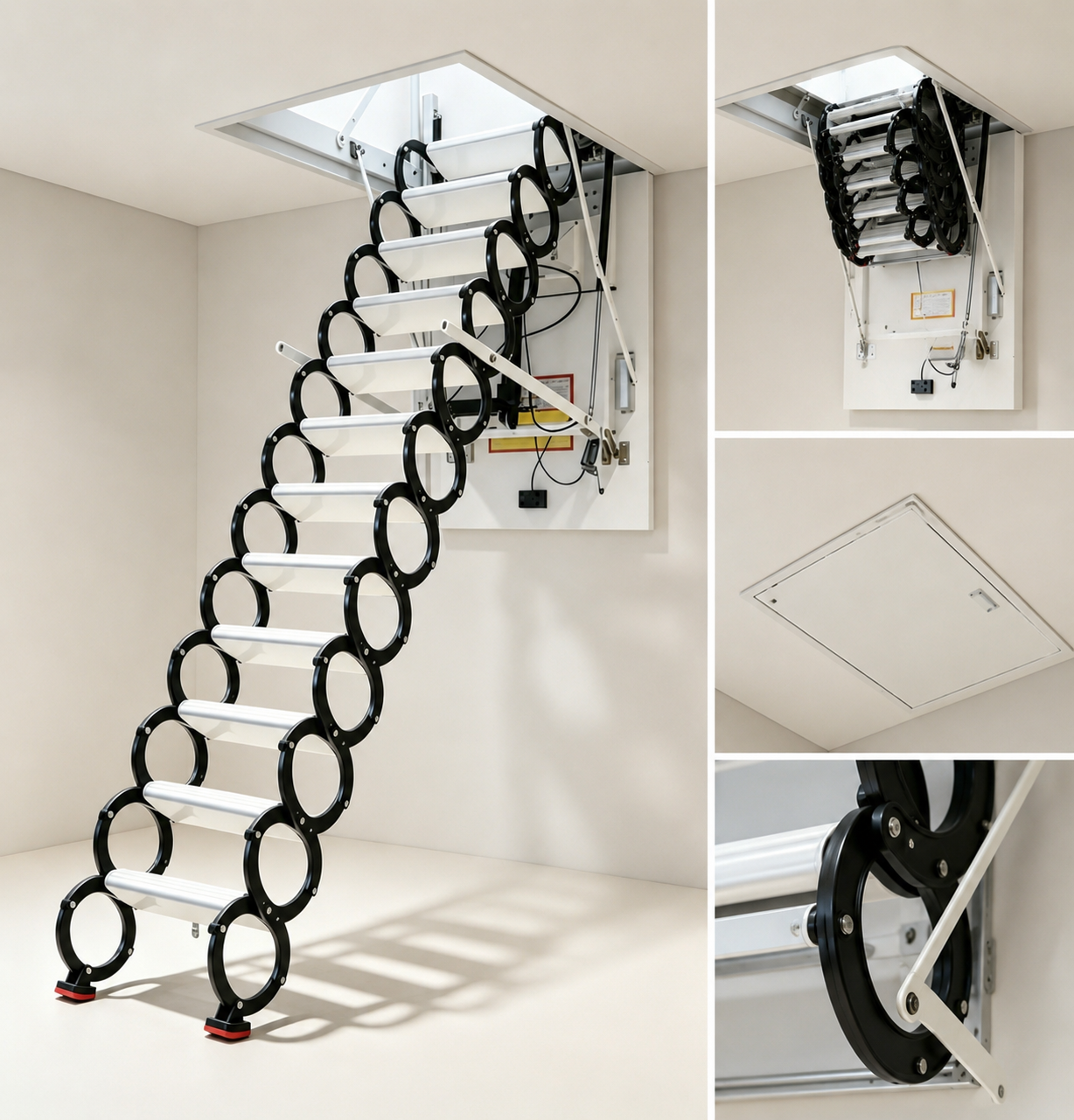
2. Ergonomic Design Improves User Comfort
A ladder is used by different people with different body conditions.
Ergonomic design helps improve:
- Climbing comfort
- User confidence
- Daily accessibility
Important design factors include:
Handrail Design
A properly designed handrail provides better support when climbing.
Our attic ladders feature an S-shaped handrail design with a 40mm width, providing a larger gripping area compared with many standard narrow handrails.
Benefits include:
- More comfortable grip
- Better hand support
- Improved climbing experience
Step Design
Steps directly affect the feeling during climbing.
Compared with thin standard steps, reinforced step structures provide:
- Better foot support
- More stable stepping experience
- Improved long-term durability
Our attic ladder steps can reach:
- 28mm thickness for steel models
- 33mm thickness for aluminum alloy models
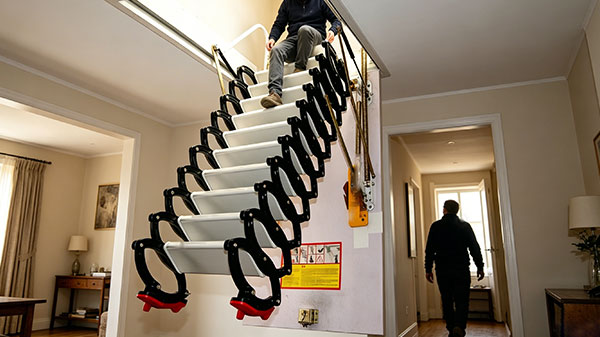
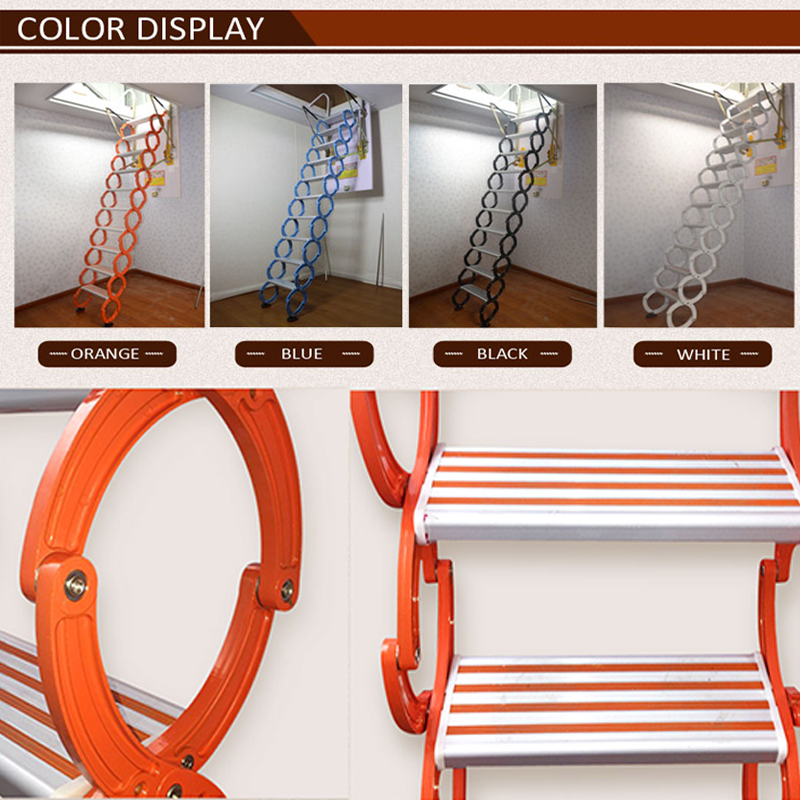
3. Space Efficiency in Modern Buildings
Modern homes and buildings often require solutions that save space.
Unlike permanent stair systems, attic ladders provide flexible access without occupying daily living areas.
They are suitable for:
- Homes with limited floor space
- Storage areas
- Renovation projects
- Buildings requiring hidden access solutions
When not in use, the ladder can remain stored, keeping the room clean and organized.
4. Suitable Operation for Different Users
A good attic ladder should consider different user groups.
For example:
Homeowners
They usually need:
- Simple operation
- Comfortable climbing
- Convenient storage access
Contractors
They focus on:
- Reliable product performance
- Easy installation process
- Customer satisfaction after completion
Distributors
They require:
- Stable quality
- Low after-sales issues
- Products suitable for different markets
Understanding user requirements helps manufacturers design better ladder solutions.
5. The Importance of Practical Design Details
Many product differences are not visible at first glance but directly affect user experience.
Important details include:
- Step thickness
- Handrail structure
- Folding smoothness
- Connection accuracy
- Surface finishing
These small design improvements determine whether the ladder feels professional and comfortable during actual use.
6. Choosing an Attic Ladder Based on Real Usage Needs
Before purchasing an attic ladder, buyers should consider:
How often will it be used?
Frequent access requires better operational comfort.
Who will use it?
Different users may require different levels of support.
What items will be stored?
Heavy storage items require stronger structural solutions.
A suitable attic ladder should match the actual usage environment instead of only focusing on price.
7. Why Product Experience Matters for Long-Term Value
A ladder may only be used for a few minutes each day, but its design affects every operation.
A better user experience means:
- Easier daily access
- Higher customer satisfaction
- Fewer complaints
- Better product reputation
For manufacturers and distributors, improving user experience is also an important way to create product value.
Conclusion
A high-quality attic ladder is designed around more than basic access.
Smooth operation, ergonomic support, comfortable steps, and practical details all contribute to a better user experience.
By focusing on these design elements, manufacturers can provide attic ladder solutions that are not only functional but also convenient for everyday use.