
How to Choose the Right Attic Ladder for Your Home or Project?
How to Choose the Right Attic Ladder for Your Home or Project?
A Practical Guide for Safe, Durable and Cost-Effective Attic Access Solutions
Attic ladders are becoming an essential part of modern residential and commercial building design. They provide a safe and convenient way to access upper storage spaces without taking up valuable floor area.
However, choosing the right attic ladder is not always easy. Many buyers focus only on price, but ignore key factors such as material, load capacity, step thickness, and installation environment.
This guide explains how to select the right attic ladder for long-term safety, performance, and cost efficiency.
Why Attic Ladders Are Important in Modern Buildings
In many homes and buildings, attic space is often underutilized. Without proper access, this space remains wasted.
Installing a folding attic ladder allows users to:
- Utilize unused attic storage space
- Improve indoor organization
- Reduce the need for external storage rental
- Increase overall property efficiency
Because of these advantages, attic ladders are widely used in residential homes, villas, warehouses, and commercial buildings.
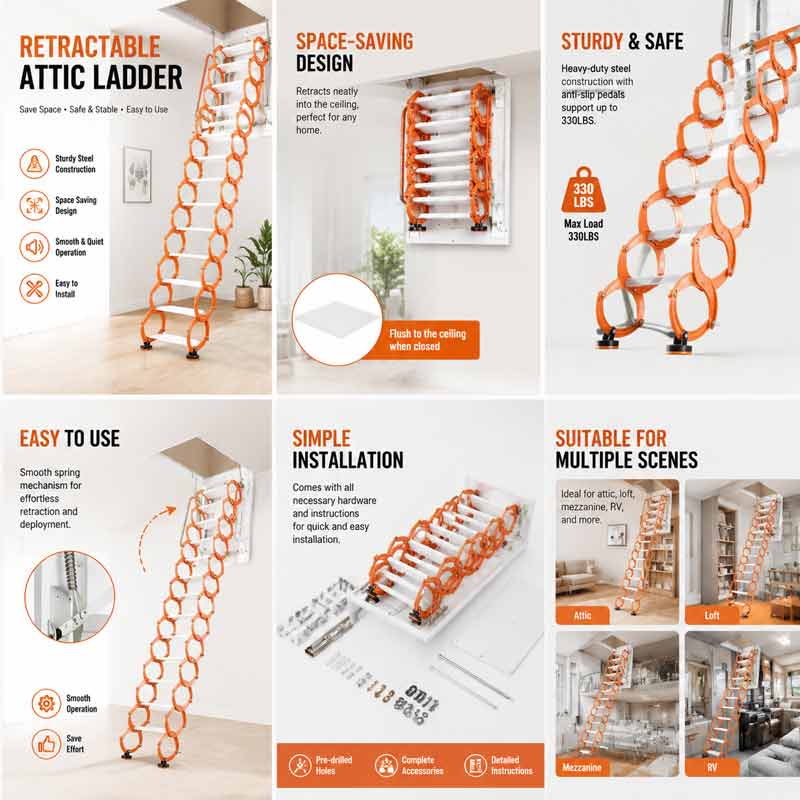
Key Factors to Consider When Choosing an Attic Ladder
1. Load Capacity
Load capacity is one of the most important safety factors.
It is not only the user’s body weight but also includes:
- Storage boxes
- Tools
- Maintenance equipment
- Additional carried items
Common load capacity options in the market:
- Standard models: 200–300 kg
- Heavy duty models: 350–550 kg
Higher load capacity provides better safety margin and longer service life.
2. Material Selection
Different materials directly affect performance and durability.
Steel Attic Ladder
Steel ladders are widely used for residential applications.
Features:
- Strong and stable structure
- Cost-effective solution
- Suitable for light to medium usage
Load capacity:
Up to 350 kg
Aluminum Alloy Attic Ladder
Aluminum alloy ladders are designed for higher performance applications.
Features:
- Lightweight structure
- Corrosion resistance
- Smooth operation
- Suitable for frequent use
Load capacity:
Up to 550 kg
3. Step Thickness and Stability
Step design plays a critical role in user safety.
Standard market specifications:
- 20 mm
- 22 mm
Upgraded heavy duty designs:
- Steel ladder: 28 mm steps
- Aluminum alloy ladder: 33 mm steps
Thicker steps provide:
- Better stability during climbing
- Reduced deformation over time
- Improved safety when carrying loads
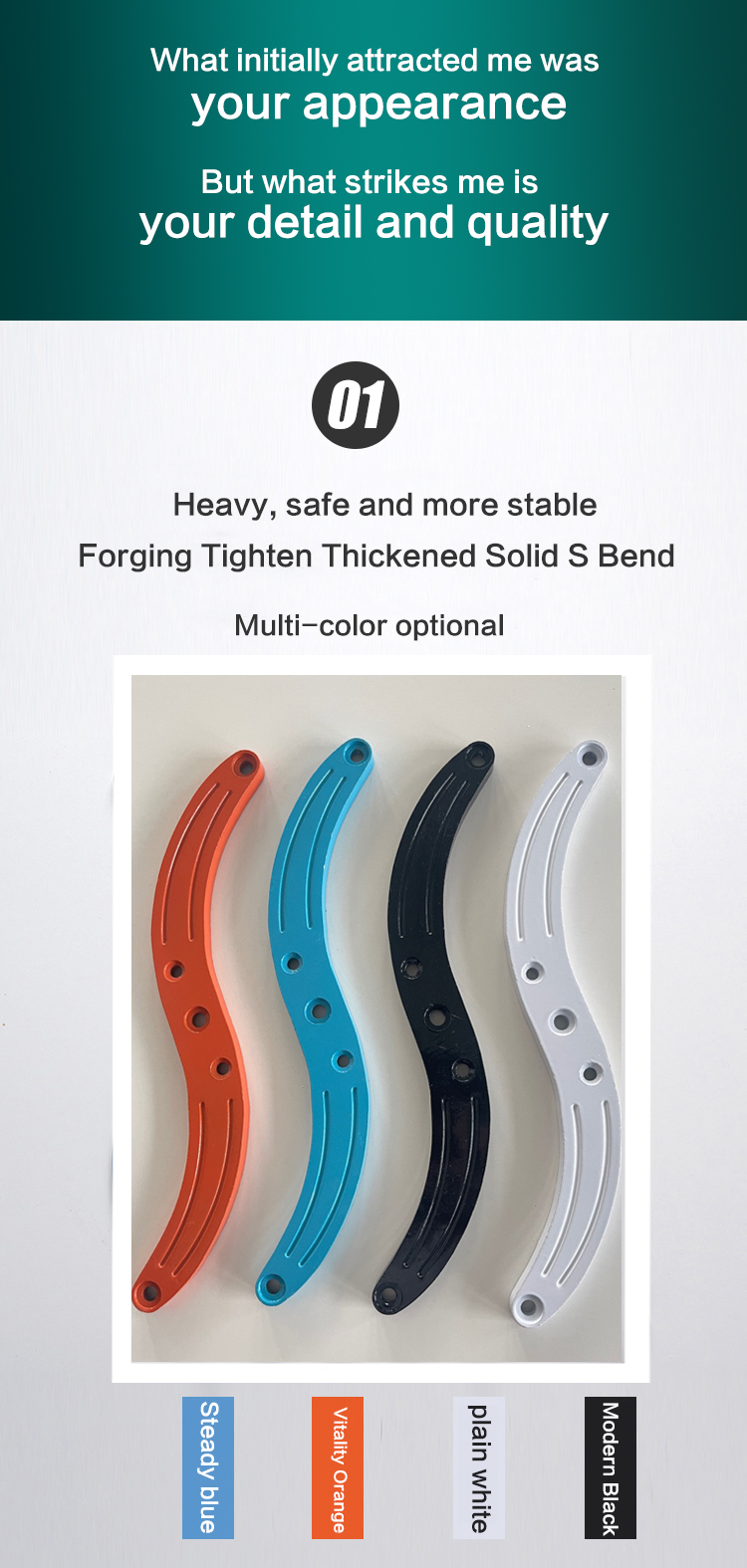
4. Handrail Design
Handrails are often overlooked but extremely important for safety.
Standard designs:
- 28–30 mm width
Upgraded ergonomic design:
- 40 mm S-shaped handrail
Benefits include:
- Better grip support
- Improved balance during climbing
- Higher safety for elderly users
- More comfortable operation
5. Installation Environment
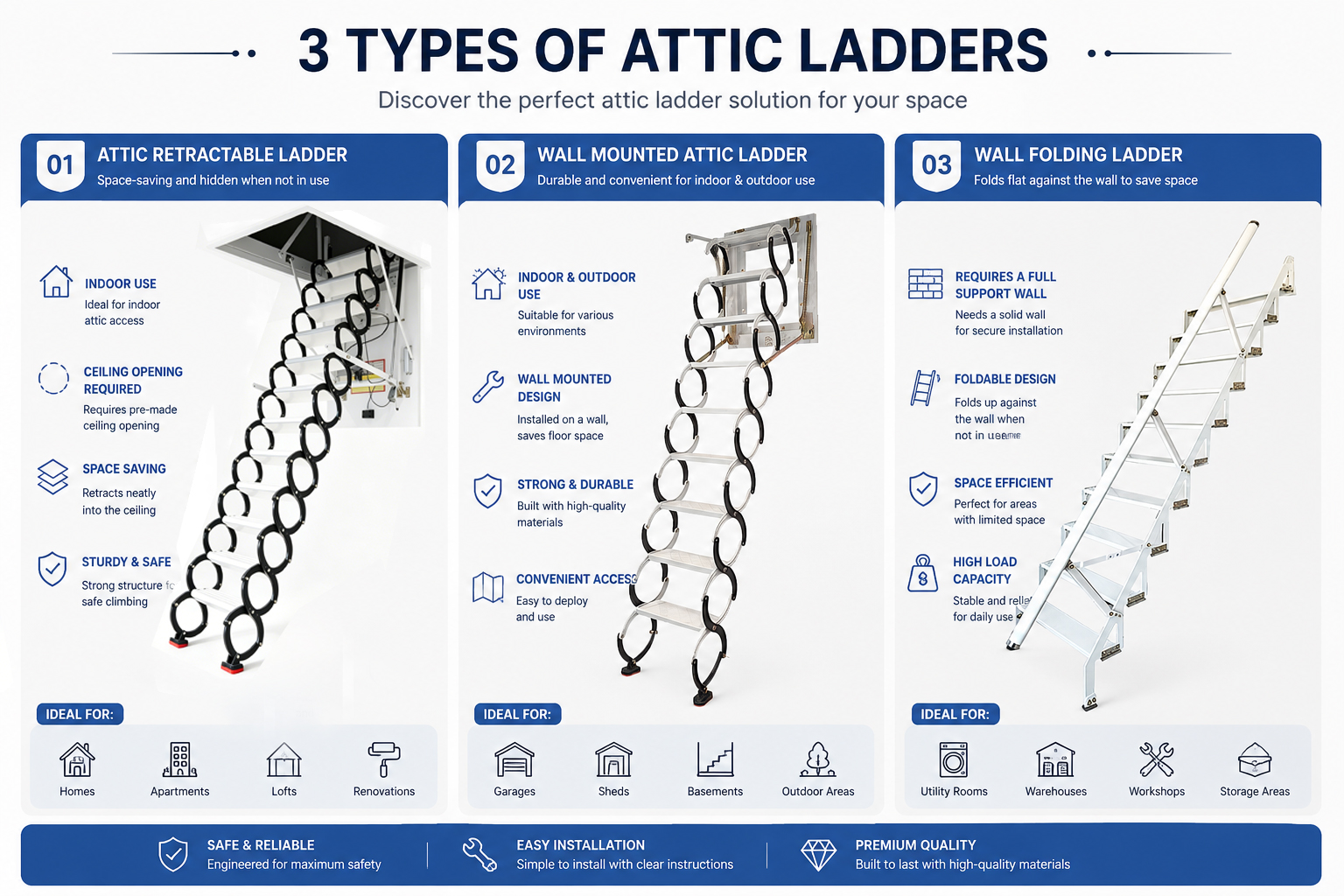
Before choosing an attic ladder, consider where it will be used:
- Residential homes
- Villas and apartments
- Warehouses
- Commercial buildings
- Industrial facilities
Different environments require different material strength and durability levels.
For example:
- Indoor residential use: steel ladder is often sufficient
- Frequent or commercial use: aluminum alloy ladder is recommended
Common Mistakes Buyers Make
Many buyers choose attic ladders based only on price, which often leads to poor long-term performance.
Common mistakes include:
- Ignoring load capacity requirements
- Choosing thin step structures
- Not considering usage frequency
- Selecting wrong material for environment
- Overlooking handrail safety design
These mistakes can result in higher maintenance costs and reduced safety.
Steel vs Aluminum Alloy: Which One Should You Choose?
The choice depends on your project requirements:
Choose Steel If:
- Budget is limited
- Usage is occasional
- Residential application only
Choose Aluminum Alloy If:
- Frequent usage is expected
- Higher load capacity is required
- Commercial or industrial environment
- Long-term durability is a priority
Why Professional Attic Ladder Manufacturers Matter
Choosing a reliable manufacturer is just as important as choosing the right product.
A professional supplier can provide:
- Stable load capacity performance
- Reinforced structural design
- OEM customization options
- CE and ISO certification
- Consistent production quality
This ensures safety and long-term reliability in real-world use.
Conclusion
Selecting the right attic ladder is not just about price—it is about safety, durability, and long-term value.
By considering material, load capacity, step thickness, and installation environment, buyers can choose a solution that meets both residential and commercial needs.
A well-designed attic ladder improves space utilization, enhances safety, and provides long-term convenience for any building type.