
Electric Attic Ladder with Remote Control Motorized ladder
Electric vs. Manual Attic Ladders: Is a Motorized Attic Ladder Worth It? What Happens During a Power Outage?
Adding attic access is a practical way to make better use of unused overhead space in a home, garage, or commercial building. However, when choosing an attic ladder, buyers often face an important decision: should they choose a traditional manual pull-down ladder or invest in a modern electric attic ladder?
A manual attic ladder is generally a straightforward and cost-conscious solution. An electric attic ladder, on the other hand, offers remote-controlled operation and can make accessing overhead storage more convenient.
But is a motorized attic ladder really worth the additional investment? And what happens if the power goes out?
These are important questions for homeowners, renovation contractors, builders, and building material distributors. In this guide, we compare electric and manual attic ladders, explain the role of a manual override system, and explore the advantages of aluminum construction to help you choose the right attic access solution.
1. Daily Operation: Manual Pull-Down vs. Electric Remote Control
The biggest difference between manual and electric attic ladders is how the stairs are opened and closed.
Manual Attic Ladders
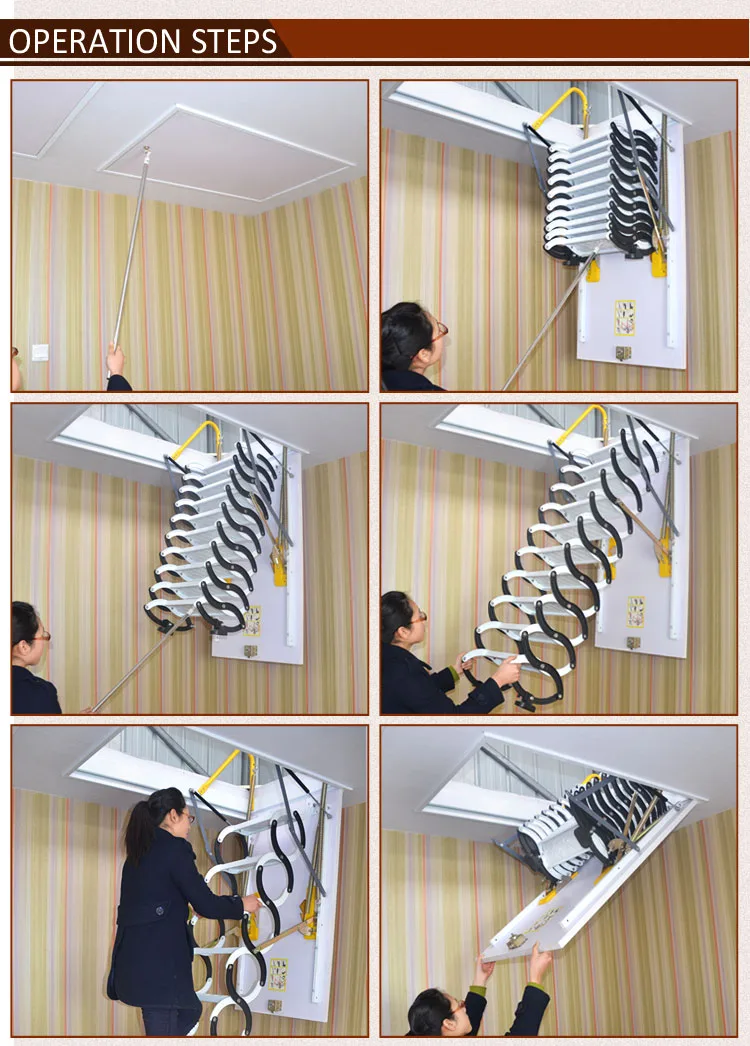
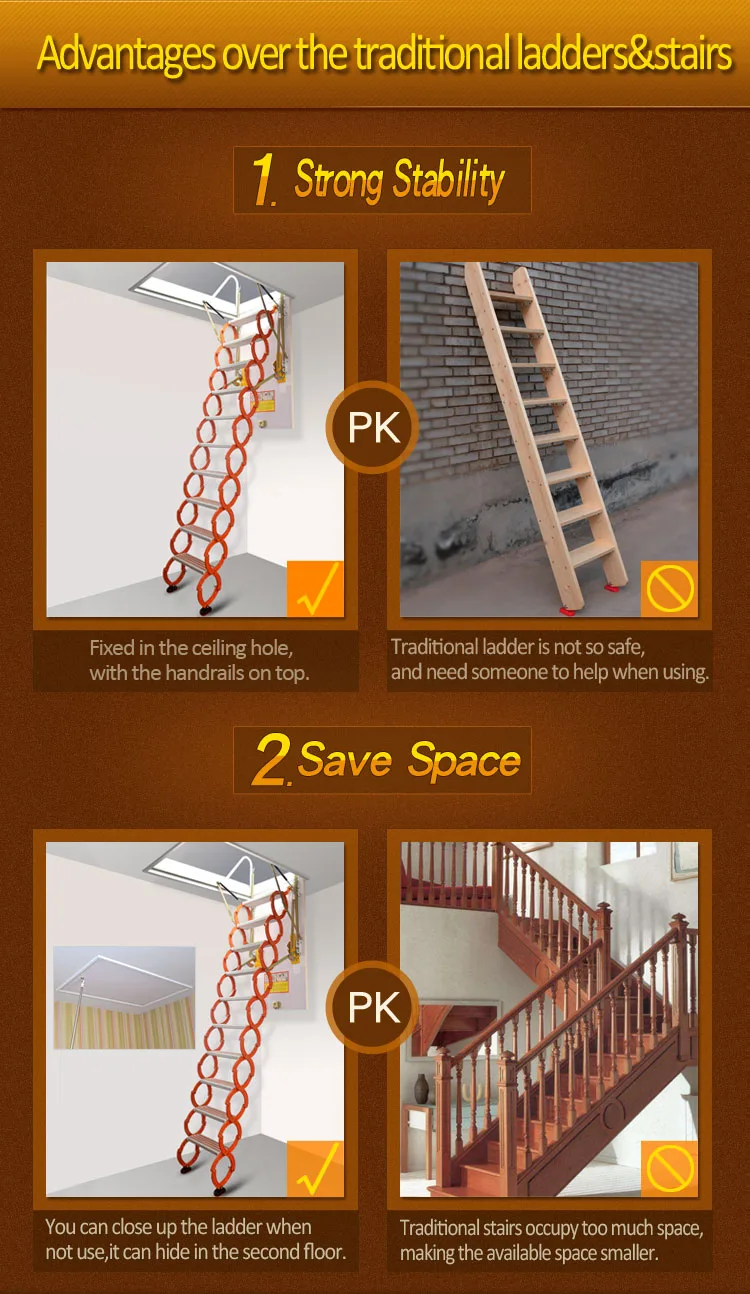
Traditional manual attic ladders require users to operate the hatch and pull the staircase down by hand. Depending on the design, a pull rod or other operating tool may be used to release and extend the ladder.
Common advantages include:
-
Lower initial purchase cost
-
No electrical connection required
-
Simple mechanical operating structure
-
Fewer electrical components to maintain
However, users need to handle the opening and closing process manually. This may be less convenient for people who frequently access their attic or have difficulty reaching and lifting an overhead staircase.
Electric Attic Ladders
An electric attic ladder uses a motorized drive system to extend and retract the staircase. Depending on the model, users can operate it with a wireless remote control or a wall-mounted switch.
Key advantages include:
-
Convenient push-button operation
-
Less manual handling when opening and closing the stairs
-
Suitable for frequent attic access
-
A clean ceiling-mounted design when the staircase is retracted
For homeowners who value convenience, or for projects where attic access is used regularly, a motorized attic ladder can be a worthwhile upgrade.
The main consideration: An electric model generally costs more and requires electrical components, installation planning, and appropriate maintenance. Buyers should evaluate how often the attic will be used before deciding whether the additional convenience justifies the investment.
2. What Happens to an Electric Attic Ladder During a Power Outage?
One of the most common concerns about motorized attic stairs is whether they can still be operated when the electricity is unavailable.
The answer depends on the product's design.
Some electric attic ladders may rely primarily on powered operation. Other models include a manual override function, which provides an alternative operating method during a power interruption.
How a Manual Override System Helps
An electric attic ladder equipped with a manual override is designed to provide an alternative to normal motorized operation when power is unavailable.
Depending on the actuator and mechanical configuration, the emergency operating process may involve:
-
Accessing the manual release: Follow the manufacturer's instructions to locate and activate the designated manual release or emergency operating component.
-
Switching to manual operation: The mechanism allows the ladder to be operated using the specified manual method instead of relying on the electric drive.
-
Returning to electric operation: After power is restored, follow the product instructions to return the system to its normal operating configuration.
Important: Manual override designs are not identical across all electric attic ladders. Buyers should confirm the exact emergency release method, required tools, and operating procedure before purchasing.
For homeowners, contractors, and distributors, a clearly documented manual override function is an important feature to consider when selecting a motorized attic ladder.
3. Aluminum vs. Steel: Which Material Is Better for an Electric Attic Ladder?
Material selection is another important factor when choosing a motorized attic staircase.
Because an electric attic ladder is installed overhead, the weight of the complete assembly matters. The hatch frame, staircase, motor, and supporting structure all contribute to the total installation load.
Aluminum and steel are both used in metal ladder construction, but they offer different characteristics.
| Comparison | Aluminum Electric Attic Ladder | Steel Electric Attic Ladder |
|---|---|---|
| Material Weight | Generally lighter | Generally heavier |
| Corrosion Resistance | Naturally corrosion-resistant | Depends on coating and surface protection |
| Handling and Installation | Lower material weight can make handling easier | Heavier components may require additional handling support |
| Structural Design | Depends on alloy, section design, and joint construction | Depends on steel grade, section design, and joint construction |
| Surface Finish | May use different protective or decorative finishes | Commonly uses painted or coated finishes |
| Load Capacity | Depends on the complete ladder design and testing | Depends on the complete ladder design and testing |
Why Choose an Aluminum Electric Attic Ladder?
Aluminum alloy is widely used in products where strength and weight need to be balanced.
For electric attic ladders, aluminum construction can offer several practical benefits:
1. Reduced Structural Weight
Aluminum is generally lighter than steel. A lighter ladder assembly can make transportation, handling, and installation more manageable, although the actual total product weight depends on the complete design.
2. Corrosion Resistance
Aluminum naturally forms a protective oxide layer, helping it resist corrosion in many indoor environments. This makes it a practical material for residential garages, attic spaces, and other building applications.
3. Practical Metal Construction
A properly engineered aluminum structure can provide the strength required for its intended load rating while keeping the overall product weight under control.
When comparing aluminum and steel models, buyers should evaluate the complete product weight, structural design, rated load capacity, and supporting test documentation rather than choosing based on material alone.
4. Ceiling Integration and Thermal Insulation
The appearance and insulation performance of the ceiling hatch are also important when selecting an electric attic ladder.
A well-designed retractable attic staircase should provide convenient access while keeping the ceiling area neat when the ladder is not in use.
Flush-Mounted Ceiling Hatch
The staircase is designed to fold into the ceiling opening when retracted. This helps keep the floor area clear and avoids the need for a permanently installed staircase.
A ceiling hatch with a suitable frame and panel also helps create a more integrated appearance with the surrounding ceiling.
Insulated Hatch Panel
For residential applications, insulation is an important consideration.
An insulated hatch panel can help reduce heat transfer between the living space and the attic. When combined with a properly fitted perimeter weatherstrip, it can also help reduce unwanted air leakage around the closed hatch.
The actual thermal performance depends on the insulation material, panel construction, sealing quality, and installation.
For projects in regions with significant seasonal temperature differences, buyers should request the hatch insulation specifications and available technical details.
5. Electric vs. Manual Attic Ladders: Which One Should You Choose?
There is no single best attic ladder for every project. The right choice depends on budget, usage frequency, installation conditions, and operating preferences.
| Selection Factor | Manual Attic Ladder | Electric Attic Ladder |
|---|---|---|
| Opening Method | Manual operation | Motorized operation |
| User Interaction | Requires physical handling | Remote control or wall switch, depending on model |
| Electrical Power | Not required | Required for normal electric operation |
| Power Outage Operation | Manual operation | Depends on whether a manual override is provided |
| Initial Cost | Generally lower | Generally higher |
| Maintenance | Mainly mechanical inspection | Mechanical and electrical inspection |
| Installation | Requires suitable ceiling framing and opening | Requires suitable framing and electrical planning |
| Best For | Budget-conscious projects and occasional access | Convenience-focused projects and frequent access |
When Is a Manual Attic Ladder the Better Choice?
A manual attic ladder may be suitable when:
-
The attic is accessed only occasionally.
-
The project has a limited budget.
-
Electrical installation is not preferred.
-
A simple mechanical solution is sufficient.
When Is an Electric Attic Ladder Worth It?
A motorized attic ladder may be a better option when:
-
The attic is used frequently.
-
Convenient remote operation is a priority.
-
The project requires a modern ceiling access solution.
-
Users want to reduce the physical effort involved in opening and closing the stairs.
-
The selected model includes a suitable manual override function for power interruptions.
For residential renovation projects, luxury homes, and selected commercial applications, an electric attic ladder can offer a more convenient alternative to traditional manual stairs.
6. What Should You Check Before Buying an Electric Attic Ladder?
Before purchasing a motorized attic staircase, buyers should review more than just the product appearance and advertised load capacity.
Here are six important points to confirm:
1. Rated Load Capacity
Check the manufacturer's stated load capacity and request supporting test documentation for the exact model. Do not assume that all electric attic ladders share the same load rating.
2. Motor and Power Supply
Confirm the motor voltage, power requirements, electrical connection method, and compatibility with the installation location.
3. Manual Override Design
Ask whether the product can be operated manually during a power outage. Request clear instructions showing how the emergency release works.
4. Rough Opening Dimensions
Measure the ceiling opening and confirm the required rough opening dimensions before ordering. Standard and customized sizes may be available depending on the manufacturer.
5. Ceiling Height Compatibility
Check the available ladder configuration against the actual floor-to-ceiling height. A suitable staircase length and installation angle are essential.
6. Hatch Insulation and Sealing
For residential applications, review the hatch panel construction, insulation details, and perimeter sealing system.
Taking the time to confirm these specifications can help prevent installation problems and ensure that the selected ladder matches the project requirements.
Frequently Asked Questions About Electric Attic Ladders
Q1: Is an electric attic ladder worth the extra cost?
An electric attic ladder can be worth the additional investment for users who access their attic frequently or prefer remote-controlled operation. For occasional use and budget-focused projects, a manual attic ladder may be sufficient.
Q2: Can an electric attic ladder work during a power outage?
It depends on the model. Some electric attic ladders include a manual override function that allows users to operate the staircase using a designated emergency procedure when electrical power is unavailable. Always confirm the manual operating method before purchasing.
Q3: Is an aluminum electric attic ladder better than a steel model?
Aluminum is generally lighter and naturally corrosion-resistant, while steel offers different structural and cost characteristics. The better option depends on the complete product design, installation requirements, and verified load capacity.
Q4: What power supply does an electric attic ladder need?
Power requirements vary by model. Some systems use a low-voltage DC motor with an appropriate power supply. Buyers should confirm the input voltage, motor specifications, and electrical connection requirements in the product datasheet.
Q5: Can an electric attic ladder fit an existing ceiling opening?
Some models are available in standard rough opening dimensions, while others can be customized. Before ordering, measure the existing opening and confirm the ceiling height, framing arrangement, and required installation clearance with the manufacturer.
Looking for a Reliable Electric Attic Ladder Manufacturer?
Choosing between a manual and electric attic ladder depends on the needs of your project. If convenient operation, aluminum construction, and a space-saving ceiling access design are priorities, a motorized attic ladder may be an excellent solution.
Xinxiang Zhuojin Machinery Co., Ltd. supplies attic ladder products for international building material distributors, wholesalers, contractors, and project buyers.
Our electric attic ladder solutions can be discussed according to different project requirements, including:
-
Aluminum ladder construction
-
Motorized remote-control operation
-
Manual override configuration, depending on model
-
Different ceiling opening dimensions
-
Customized product configurations
-
Wholesale and OEM cooperation
Explore our Aluminum Electric Attic Ladder with Manual Override or contact our team with your ceiling height, rough opening dimensions, and order requirements.
We look forward to helping you find a suitable attic access solution for your market or project.