
Are Scissor Attic Ladders Safe? 5 Key Safety Features
Are Scissor Attic Ladders Safe? 5 Critical Engineering Features to Look For
When upgrading overhead storage access, many homeowners, renovation contractors, and building material distributors consider replacing traditional wooden folding stairs with a modern manual scissor attic ladder.
However, one common question remains: Are scissor attic ladders actually safe?
With multiple metal linkages, pivot joints, and folding components, buyers naturally want to know whether these ladders can provide sufficient stability and support during everyday use.
The answer depends on several important factors, including load capacity, mechanical construction, step design, installation quality, and regular maintenance.
A properly designed and installed heavy-duty manual scissor attic ladder can provide a practical and space-saving solution for residential and commercial attic access.
In this guide, we explore five important engineering features to consider when choosing a safe and reliable scissor attic ladder.
1. Check the Rated Load Capacity and Structural Performance
Load capacity is one of the most important factors when selecting an attic ladder.
When climbing into an attic, the ladder must support the user's weight as well as any items being carried. Therefore, buyers should consider the total applied load rather than looking only at the ladder's appearance or material.
For example, the total load may include:
-
User body weight.
-
Tools and equipment.
-
Household storage boxes.
-
Other items carried during attic access.
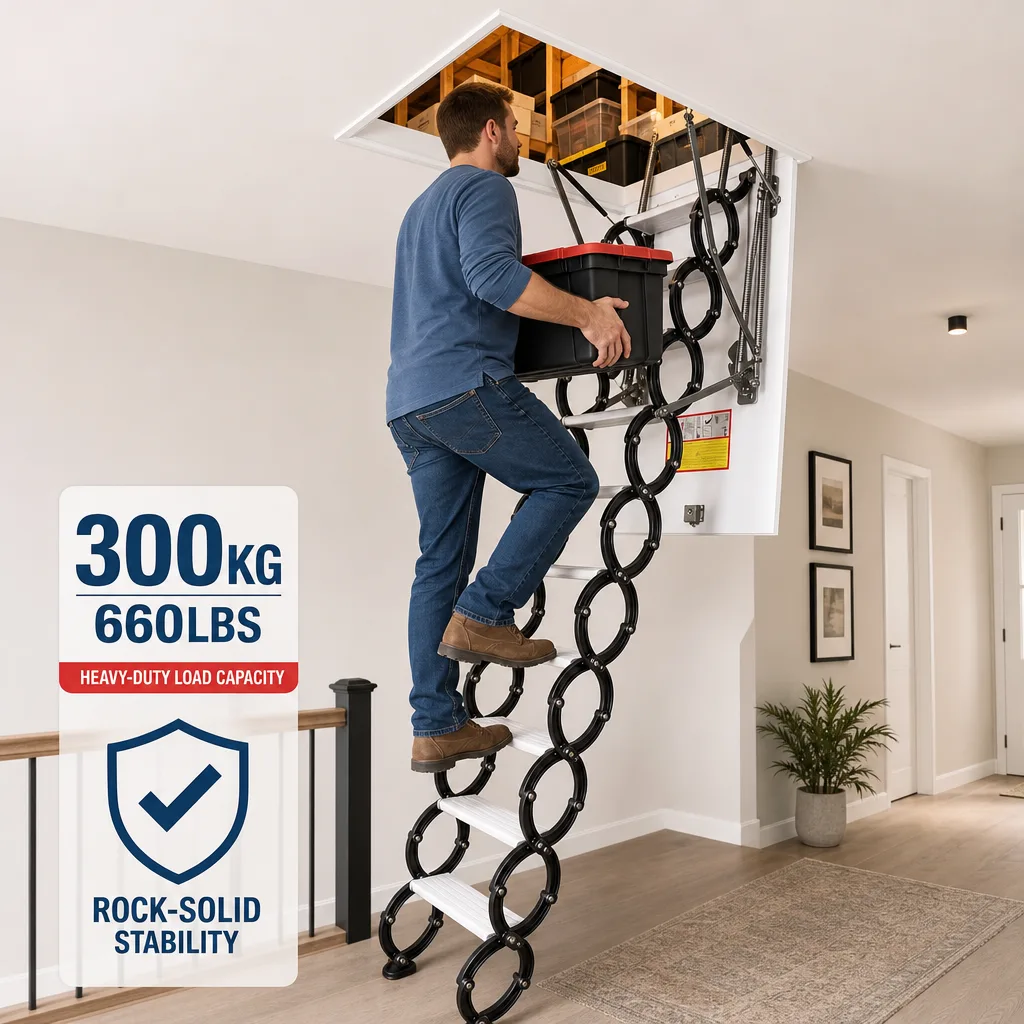
A heavy-duty manual scissor attic ladder should have a clearly specified maximum rated load capacity supported by appropriate product testing.
Selected models from Xinxiang Zhuojin Machinery Co., Ltd. offer a maximum load capacity of up to 660 lbs (300 kg), depending on the model and its verified specifications.
When comparing different attic ladder products, buyers should check:
-
Manufacturer-rated load capacity.
-
Applicable product safety standards.
-
Available load testing documentation.
-
Installation and usage requirements.
It is important to distinguish between a manufacturer's stated load capacity and formal certification. A 660 lbs load rating does not automatically mean that a ladder carries an ANSI Type IAA classification.
Always verify the applicable standard and certification documentation before making purchasing decisions.
2. Metal Scissor Linkage Mechanism and Structural Stability
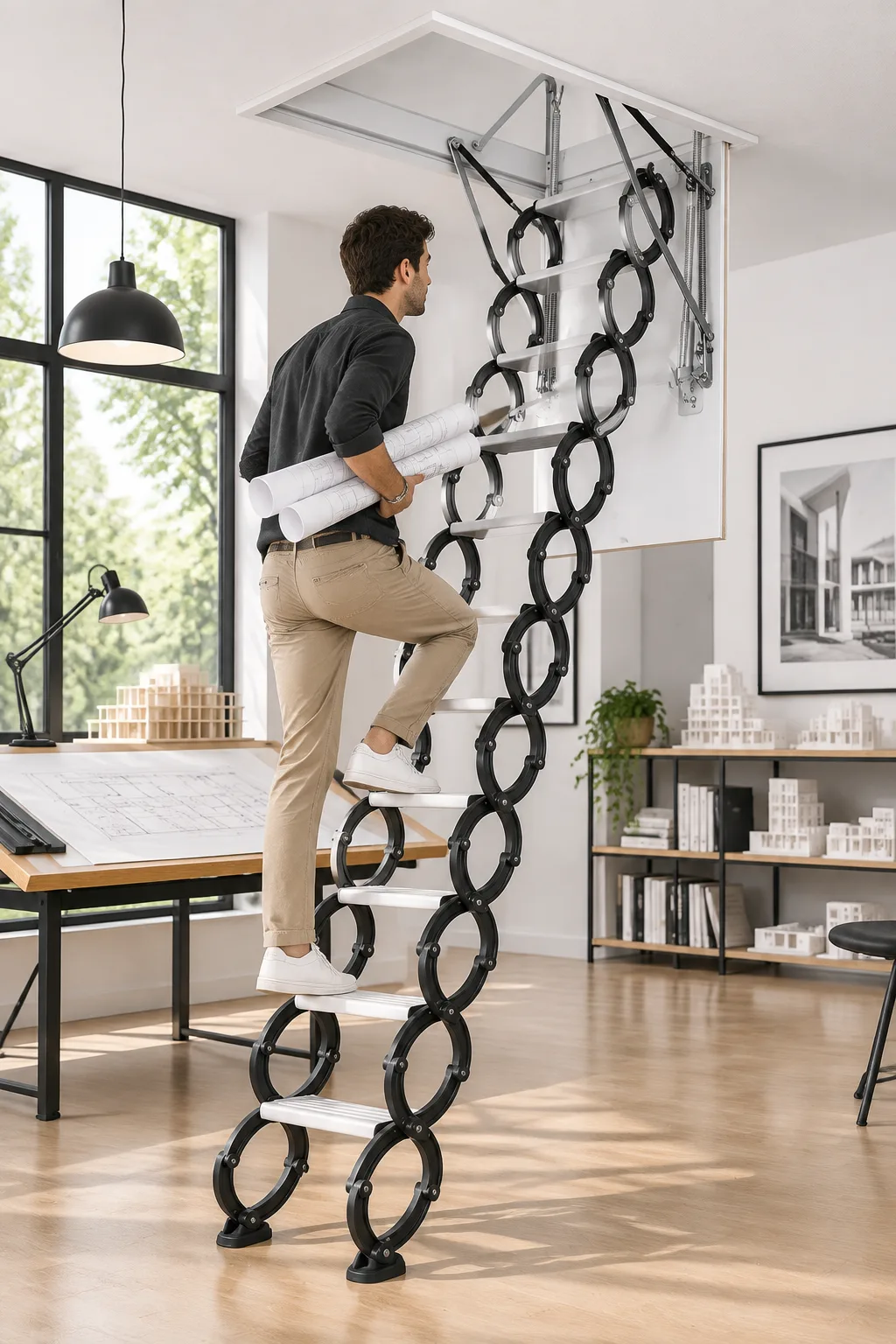
The folding mechanism is another critical feature that influences the performance of a manual scissor attic ladder.
Unlike traditional wooden folding stairs that use several hinged sections, a scissor attic ladder uses interconnected metal linkage arms to expand and retract.
This pantograph-style mechanism allows the ladder to extend downward for access and collapse into a compact overhead position when not in use.
Several structural elements are worth examining.
Interconnected Metal Linkages
The metal linkage arms connect different sections of the ladder through mechanical pivot points.
Their coordinated movement allows the ladder to expand and retract while maintaining its intended folding configuration.
Mechanical Pivot Connections
Pivot connections are essential components of the scissor mechanism.
Well-manufactured joints help maintain consistent movement between connected metal arms. Buyers should inspect the connections for proper assembly, visible damage, and abnormal looseness.
Structural Coordination
Both sides of the ladder should work together during expansion and retraction.
A properly manufactured linkage structure helps maintain the intended ladder configuration during operation.
For buyers evaluating a heavy-duty metal attic ladder, the quality of the linkage components and their mechanical connections should be an important consideration.
3. Upper Safety Handrail for Better Attic Access
The transition between the ladder and the attic floor is an important part of attic access safety.
When climbing into an attic, users need a stable way to support themselves while moving between the ladder and the upper floor.
Some traditional folding attic ladders do not include an integrated upper handrail, which may leave users with fewer gripping options.
A manual scissor attic ladder equipped with an integrated metal safety handrail provides an additional handhold near the attic opening.
This feature can help users:
-
Maintain a more secure hand position.
-
Support themselves when approaching the attic opening.
-
Improve grip during entry and exit.
-
Navigate the transition between the ladder and attic floor.
When selecting an attic ladder, check whether the handrail is included in the specific model and whether its installation follows the manufacturer's instructions.
A handrail is a useful safety feature, but it does not replace proper climbing techniques or the need to maintain appropriate hand and foot contact.
4. Wide Aluminum Steps and Anti-Slip Surfaces
The design of the ladder steps directly affects climbing comfort and foot placement.
Some conventional attic ladders use relatively narrow rungs, providing a smaller standing surface.
By comparison, heavy-duty scissor attic ladders may feature wider aluminum alloy steps designed to provide more room for foot placement.
Important step features include:
Wide Standing Surface
Wider steps provide a larger contact area for the user's feet compared with conventional narrow ladder rungs.
This can make climbing more comfortable, particularly when accessing frequently used storage areas.
Anti-Slip Surface Design
Textured or corrugated step surfaces help improve foot contact during climbing.
When evaluating a ladder, buyers should check the step surface, finish, and overall construction quality.
Aluminum Alloy Construction
Aluminum alloy steps offer a lightweight metal construction option while providing the structural properties required for their intended application.
For buyers sourcing a heavy-duty attic access solution, the combination of metal linkage components and aluminum alloy steps is an important product feature to consider.
5. Quality of Linkage Joints and Floor Contact Components
A reliable scissor attic ladder depends on more than its main metal structure.
Smaller mechanical components also contribute to its overall performance.
Linkage Joint Quality
The pivot joints connect individual linkage arms and allow the ladder to expand and retract.
Buyers should look for:
-
Properly assembled mechanical joints.
-
Secure fastening components.
-
Consistent movement during operation.
-
No visible cracks or damaged connections.
Regular inspection is important because mechanical components can experience wear through repeated use.
Stable Base and Rubber Foot Pads
The ladder's bottom contact points also deserve attention.
Some models feature rubber foot pads designed to provide better contact with the floor and help protect floor surfaces.
The condition and positioning of these pads can influence how the ladder contacts the ground.
Always install the ladder on a suitable, stable surface and follow the manufacturer's installation requirements.
6. Proper Installation and Maintenance for Safer Attic Access
Even a well-designed attic ladder requires correct installation and maintenance.
Before installing a manual scissor attic ladder, buyers and contractors should check the following factors.
Check the Ceiling Structure
Make sure the ceiling structure and mounting location are suitable for the selected attic ladder.
The ladder frame must be installed according to the manufacturer's instructions and the building's structural requirements.
Confirm the Rough Opening Dimensions
Measure the ceiling opening carefully before purchasing.
The opening dimensions must match the required specifications of the selected ladder model.
Verify the Ceiling Height
Different attic ladder models are designed for different ceiling heights.
Always confirm that the selected configuration matches the actual floor-to-ceiling measurement.
Inspect Mechanical Components Regularly
Check the linkage arms, pivot joints, fasteners, steps, and mounting frame for signs of wear or damage.
If any component appears damaged or loose, discontinue use until the issue has been properly addressed.
Follow Safe Climbing Practices
For safer everyday use:
-
Ensure the ladder is fully extended before climbing.
-
Keep the steps clean and dry.
-
Maintain appropriate hand and foot contact.
-
Do not exceed the manufacturer's rated load capacity.
-
Avoid carrying oversized objects that interfere with safe climbing.
Proper installation, inspection, and operation are essential parts of attic ladder safety.
7. Frequently Asked Questions About Scissor Attic Ladder Safety
Q1: Are manual scissor attic ladders safe for everyday use?
Manual scissor attic ladders can provide safe attic access when properly designed, installed, and maintained. Buyers should check the rated load capacity, structural components, installation requirements, and manufacturer's safety instructions before use.
Q2: Can a scissor attic ladder collapse while someone is climbing?
A properly installed and maintained scissor attic ladder should operate according to its designed mechanical structure. Before climbing, ensure that the ladder is fully extended, correctly positioned, and free from damaged or loose components.
Q3: What load capacity should I look for when buying a heavy-duty attic ladder?
The required load capacity depends on the intended application and the total weight placed on the ladder. Always check the manufacturer's rated load capacity and supporting test documentation. Selected heavy-duty models offer capacities of up to 660 lbs (300 kg).
Q4: How can I maintain a manual scissor attic ladder?
Regularly inspect the metal linkage arms, pivot joints, fasteners, steps, and mounting frame. Keep the steps clean and dry, and follow the manufacturer's maintenance recommendations. Discontinue use if any structural damage or abnormal movement is detected.
8. Wholesale Heavy-Duty Manual Scissor Attic Ladders from a Direct Manufacturer
Are you looking for a reliable manufacturer of heavy-duty manual scissor attic ladders for your distribution business, construction projects, or building material supply chain?
Xinxiang Zhuojin Machinery Co., Ltd. specializes in attic ladder manufacturing and provides product solutions for international buyers.
Our factory supports:
-
Factory-direct wholesale supply.
-
OEM and customized product requirements.
-
Different product specifications and configurations.
-
Quality inspection during production.
-
Supply support for importers, distributors, and construction project buyers.
Whether you are sourcing manual scissor attic ladders for residential applications or commercial distribution, our team can help you identify suitable models according to your project requirements.
Looking for a reliable manual scissor attic ladder supplier?
Explore Our Heavy-Duty Manual Attic Ladder
Contact Xinxiang Zhuojin Machinery Co., Ltd.
Contact our factory team with your required specifications, estimated order quantity, and target market to discuss wholesale pricing and customization options.