
How to Choose an Attic Ladder: Size, Types & Installation
How to Choose an Attic Ladder: Size, Load Capacity and Installation Guide
An attic ladder provides convenient access to storage areas and loft spaces without requiring a permanent staircase. Whether you are renovating an existing attic entrance or planning a new installation, choosing the right ladder involves more than simply checking its overall height.
The opening dimensions, ceiling height, available landing space, ladder structure, and load capacity all affect the suitability of an attic ladder.
For homeowners, building contractors, and ladder distributors, understanding these factors can help avoid installation problems and select a suitable ladder for different applications.
In this guide, we explain the key considerations when choosing an attic ladder, including installation space, load requirements, material options, and different ladder configurations.
1. Can You Replace an Existing Attic Hatch with a Folding Ladder?
In many cases, an existing attic access hatch can be upgraded to accommodate a folding attic ladder. However, whether the replacement is straightforward depends on the existing opening and the dimensions required by the new ladder.
A simple push-up access hatch may only provide enough space for inspection or occasional access. A folding attic ladder generally requires an opening that matches its frame dimensions and folding mechanism.
Before purchasing a replacement ladder, check the following:
Existing Opening Dimensions
Measure the length and width of the existing ceiling opening. Compare these measurements with the installation dimensions specified by the ladder manufacturer.
Ceiling Structure
Check the direction and position of the ceiling joists around the opening. The ladder frame must be installed with appropriate structural support.
Available Installation Space
Make sure there is enough room around the opening for the ladder frame, hinges, and operating mechanism.
Possible Structural Modifications
Some installations may require adjustments to the existing opening. Any work involving structural joists or roof trusses should be assessed by a qualified building professional before modification.
Not every attic ladder is designed to fit an existing hatch. Always confirm the required opening dimensions before ordering.
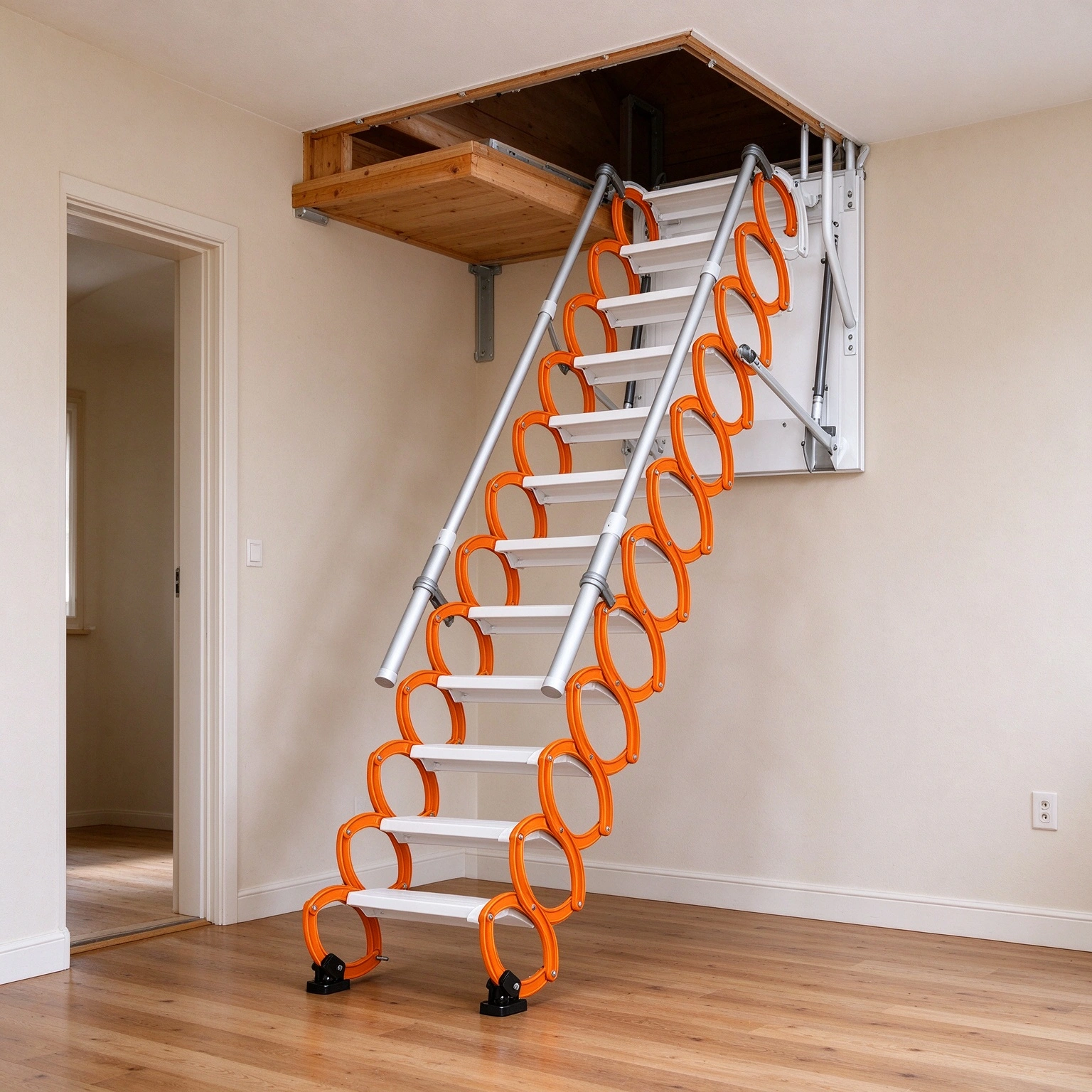
2. Three Important Measurements Before Buying an Attic Ladder
Choosing the correct ladder size is essential for proper installation and convenient operation.
There are three main measurements to consider.
1. Floor-to-Ceiling Height
Measure the vertical distance from the finished floor to the ceiling where the ladder will be installed.
This measurement helps determine the required ladder length and the appropriate number of sections or steps.
Do not select a ladder based only on the ceiling height listed in a product title. Check the manufacturer's applicable installation height range.
2. Attic Opening Dimensions
Measure the length and width of the ceiling opening.
The opening must be compatible with the ladder frame and its folding mechanism. Different attic ladder models may require different opening dimensions.
3. Landing and Operating Clearance
Check the available floor space below and around the attic opening.
Consider:
-
The distance between the opening and nearby walls
-
The position of doors and furniture
-
The space required for the ladder to extend
-
The clearance needed when opening and closing the ladder
For folding and retractable models, the surrounding space must allow the ladder to move without obstruction.
3. How to Choose the Right Attic Ladder Load Capacity
Load capacity is an important factor when selecting an attic ladder.
Buyers should consider the intended application, the expected user weight, and any tools or materials that may be carried while climbing.
However, the ladder's rated working load must always be the primary reference. Do not calculate a suitable ladder capacity using body weight alone or assume that every ladder follows the same rating system.
When comparing different models, check:
Rated Load Capacity
Review the manufacturer's stated maximum load and the conditions under which it applies.
Structural Design
The frame, steps, joints, fasteners, and supporting components all contribute to the ladder's overall performance.
Frequency of Use
A ladder used occasionally for household storage may have different requirements from one used regularly in a commercial building.
Applicable Product Standards
Check the relevant product documentation and test information for the specific model and target market.
For example, EN 131 and ANSI ladder classifications belong to different standards systems. Their ratings should not be treated as interchangeable.
For EN 131-compliant portable ladders, the commonly referenced maximum total load is 150 kg, including the user, tools, equipment, and materials. Always verify the applicable standard and product documentation for the actual ladder being purchased.
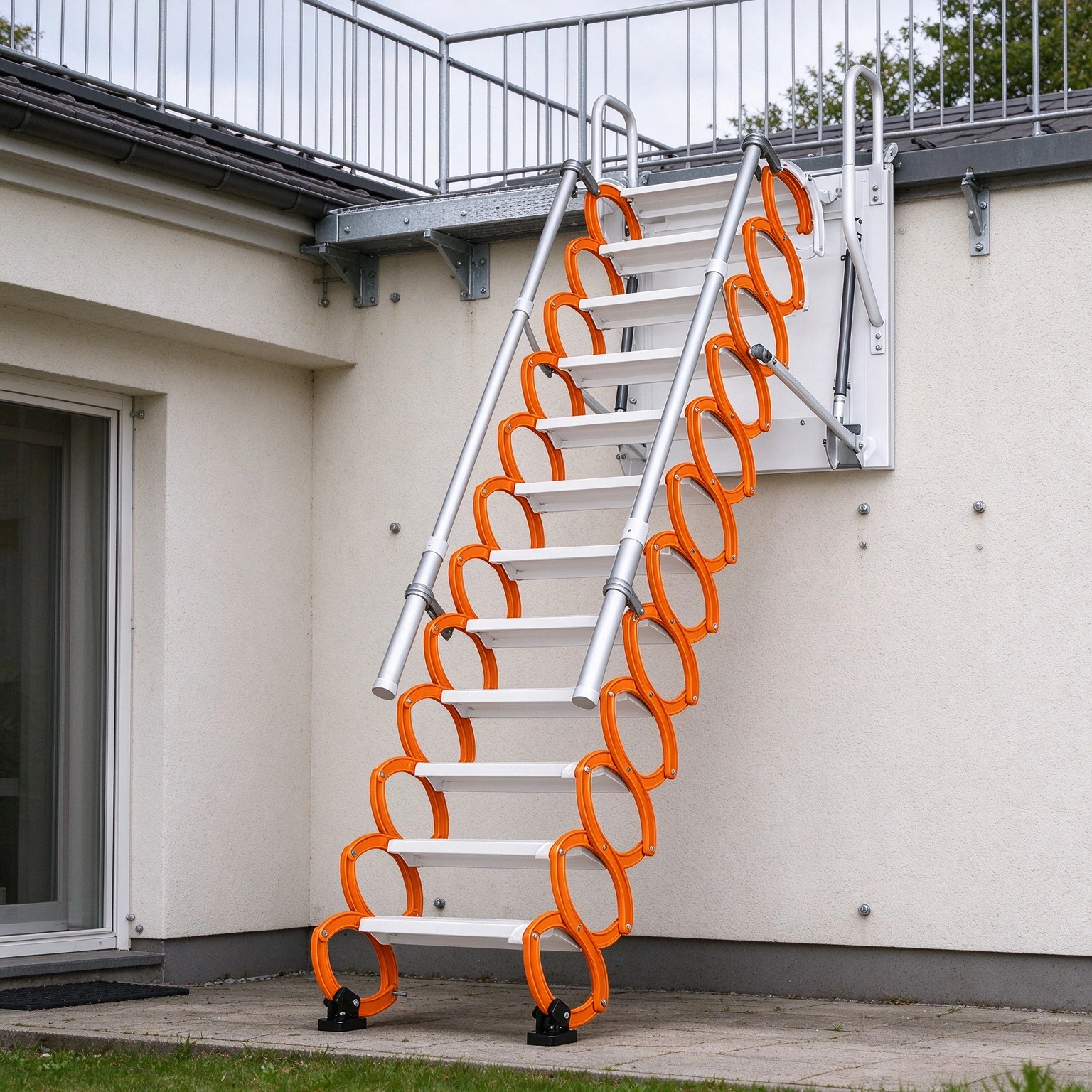
4. Different Attic Ladder Materials and Structures
Attic ladders are available in different materials and structural configurations. The right choice depends on installation space, operating requirements, and intended use.
Aluminum Attic Ladders
Aluminum ladders are commonly selected for their relatively low weight, corrosion resistance, and convenient operation.
They are suitable for many residential and commercial attic access applications.
Different aluminum structures and step configurations are available depending on the product model.
Steel Attic Ladders
Steel structures can provide a rigid construction and are suitable for designs requiring specific structural configurations.
However, steel ladders are generally heavier than comparable aluminum models, which should be considered when selecting an operating mechanism.
Timber Attic Ladders
Timber attic ladders are commonly used in traditional residential installations.
Some models feature insulated ceiling doors and perimeter sealing to help reduce unwanted air movement between the living area and attic space.
Telescopic Attic Ladders
Telescopic ladders extend and retract through sliding sections.
Their compact storage design can be useful where available space is limited. Buyers should check the extended height, folded dimensions, and operating requirements of each model.
Folding Attic Ladders
Folding models use connected ladder sections that unfold for access and fold back into their storage position.
They are available in different configurations, including manual and electrically operated designs.
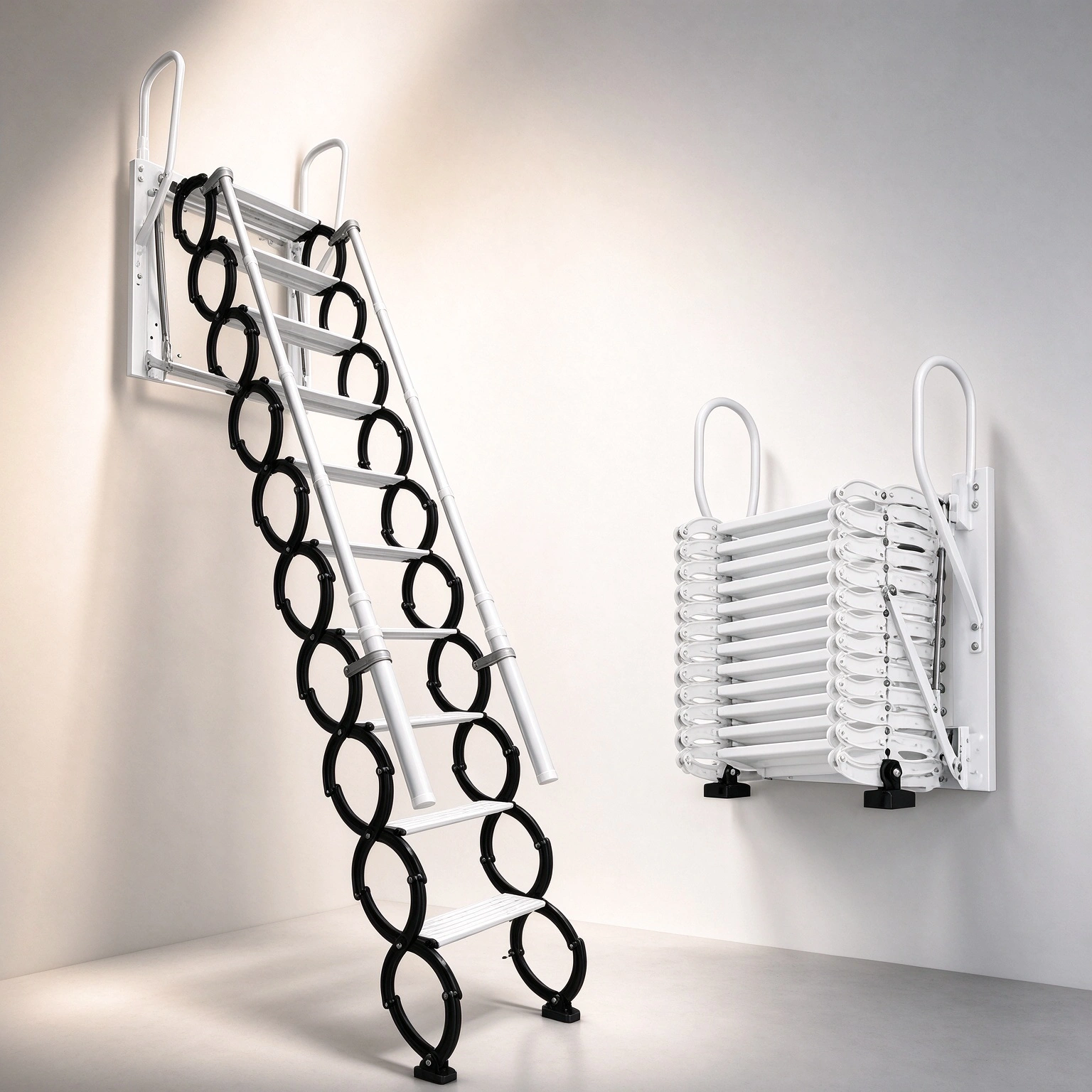
Wall-Mounted Folding Attic Ladders
Unlike conventional ceiling-mounted attic ladders, wall-mounted models are installed on a suitable wall structure.
They do not require a traditional ceiling access opening and can fold back against the wall when not in use.
This configuration is particularly useful for spaces where ceiling modifications are undesirable or where access is required from a wall-mounted position.
5. Manual vs. Electric Attic Ladders: Which Should You Choose?
The operating mechanism is another important consideration when selecting an attic ladder.
Manual Attic Ladders
Manual attic ladders are operated by hand. Their relatively simple operating structure makes them a practical choice for residential and commercial applications.
Advantages include:
-
Straightforward operation
-
No electrical connection required
-
Simple operating mechanism
-
Convenient maintenance
-
Different folding and structural configurations
Manual models are suitable for buyers who prefer a conventional operating method without additional electrical components.
Electric Attic Ladders
Electric attic ladders use an electric drive system to extend and retract the ladder.
They are designed for users who prefer powered operation, particularly where the ladder is installed frequently or manual operation is less convenient.
Important considerations include:
-
Available power supply
-
Remote control or operating switch configuration
-
Installation space
-
Electrical installation requirements
-
Maintenance and operating instructions
The best option depends on the installation environment, user preferences, and project budget.
6. DIY Installation or Professional Installation?
Some attic ladder replacements may be relatively straightforward when the existing opening and supporting structure already match the product requirements.
However, not every installation should be treated as a simple DIY project.
When a Standard Replacement May Be Suitable
-
The existing opening matches the manufacturer's installation dimensions.
-
The surrounding ceiling structure is suitable.
-
No major structural modifications are required.
-
The installation can be completed according to the manufacturer's instructions.
When Professional Assessment Is Recommended
-
The ceiling opening needs to be enlarged.
-
Structural joists or roof trusses may be affected.
-
Electrical wiring or plumbing is located around the installation area.
-
The existing structure has visible damage.
-
The installation involves complex load-bearing requirements.
Never cut structural roof trusses or modify load-bearing members without professional assessment and approval.
Correct installation is essential for the ladder to operate as intended and maintain its specified load capacity.
7. What Should Wholesale Buyers Consider When Sourcing Attic Ladders?
For importers, distributors, and building material suppliers, choosing an attic ladder involves more than comparing the unit price.
Several factors should be considered before placing an order.
Product Configuration
Determine whether your customers need manual, electric, telescopic, folding, or wall-mounted attic ladders.
Different product configurations serve different installation environments.
Installation Dimensions
Confirm the applicable ceiling height, opening dimensions, and installation requirements for each model.
Material and Construction
Compare aluminum and steel structures, step designs, connection components, and operating mechanisms.
Load Capacity and Documentation
Request the manufacturer's technical specifications and applicable test or compliance documents.
Customization and Packaging
For wholesale orders, check whether the supplier can provide customized dimensions, product configurations, branding, and export packaging.
Working with a manufacturer that offers multiple attic ladder configurations can make it easier to develop a product range for different customer markets.
8. Frequently Asked Questions
Q1: Can I replace a basic attic hatch with a folding attic ladder?
Yes, in many cases. However, the existing opening must match the dimensions required by the new ladder. Some installations may require additional structural assessment or modifications.
Q2: How do I measure the correct size for an attic ladder?
Measure the floor-to-ceiling height, ceiling opening length and width, and available floor clearance. Also check the manufacturer's required installation dimensions before purchasing.
Q3: How much weight can an attic ladder support?
The load capacity depends on the specific ladder model and its applicable product standard. Always check the manufacturer's rated working load and technical documentation. The rating should account for the user and any tools or materials carried.
Q4: Can I cut a ceiling joist to make a larger attic opening?
Do not cut or modify structural joists or roof trusses without professional assessment. Structural modifications must be designed and carried out according to applicable building requirements.
Q5: What is the difference between manual and electric attic ladders?
Manual attic ladders are operated by hand and generally have a simpler operating mechanism. Electric models use a powered drive system to extend and retract the ladder, offering a different level of operating convenience.
Q6: Is a wall-mounted attic ladder different from a traditional pull-down attic ladder?
Yes. A traditional pull-down attic ladder is installed through a ceiling opening, while a wall-mounted folding attic ladder is fixed to a suitable wall structure and folds back against the wall when not in use. They are designed for different installation environments.
Q7: What information should I provide when requesting a wholesale quotation?
Buyers should provide the required ladder type, installation height, opening dimensions where applicable, preferred material, estimated order quantity, and destination market. This information helps the manufacturer recommend a suitable configuration.
9. Attic Ladder Manufacturer for Wholesale and Custom Orders
Xinxiang Zhuojin Machinery Co., Ltd. specializes in manufacturing attic ladders and industrial ladders for international markets.
Our product range includes manual attic ladders, electric attic ladders, wall-mounted folding attic ladders, and different industrial ladder configurations.
We support distributors, importers, building material suppliers, and project purchasers with:
-
Multiple ladder configurations
-
Customized product dimensions
-
OEM and ODM manufacturing
-
Product branding and export packaging
-
Factory production and order coordination
Whether you are expanding your existing ladder product range or sourcing a specific attic ladder configuration for a building project, our team can help you evaluate the available options.
Contact Our Factory for Wholesale Pricing and Product Details
Website: https://www.xxzjmachine.com
Email: info001@xxzjmachine.com
WhatsApp: +86 18737347370